
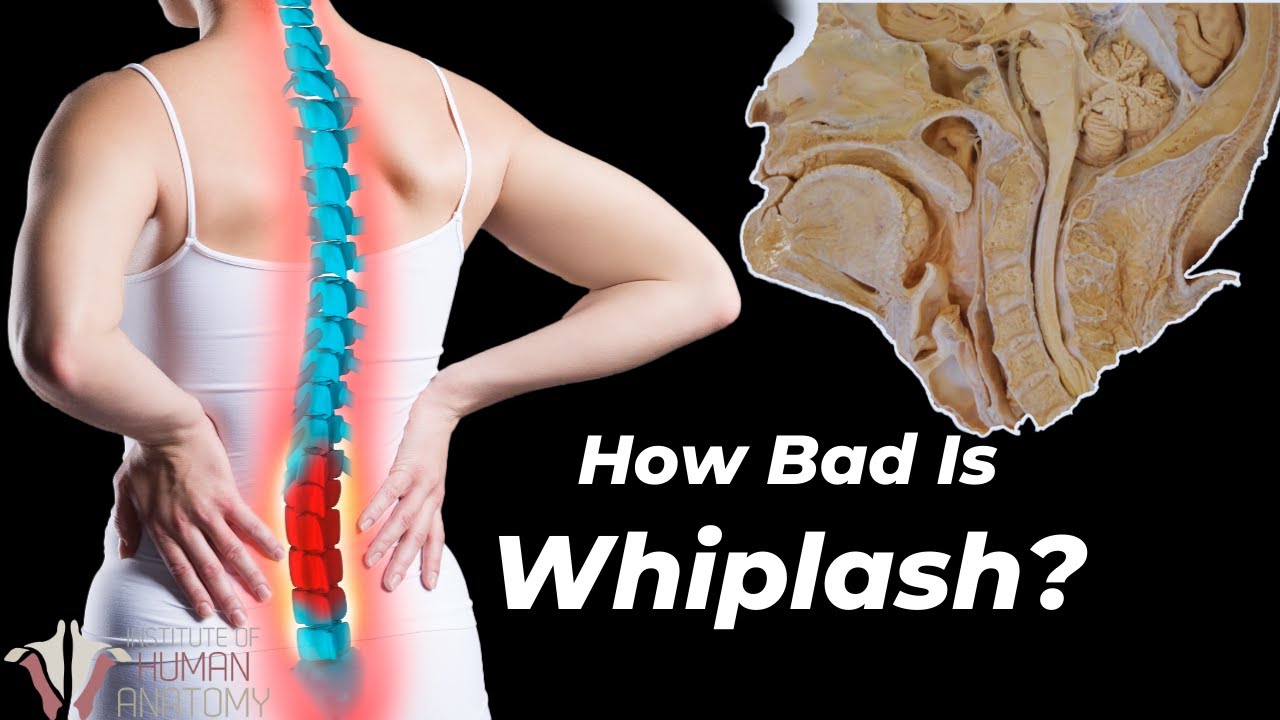
🚗 How Whiplash Can Destroy Your Neck
1. 🔥 What is Whiplash?
Point: Whiplash, or cervical acceleration-deceleration syndrome, is a neck injury caused by sudden back-and-forth motion.
Principle: It often occurs in rear-end collisions but can also result from sports injuries, falls, or even headbanging.
Inference: Whiplash can lead to long-term pain and mobility issues if not properly treated.
2. 🚘 How a Car Crash Causes Whiplash
Point: In a rear-end collision, the seat pushes into the thoracic spine, moving the chest forward while the head lags behind.
Principle: This movement creates an unnatural S-shaped curve in the cervical spine.
Inference: The rapid stretching and compression of the neck muscles and ligaments can cause severe injury.
3. 🦴 The Anatomy of the Cervical Spine
Point: The cervical spine consists of seven vertebrae (C1–C7), intervertebral discs, and ligaments.
Principle: Each vertebra is uniquely structured to provide flexibility while maintaining stability.
Inference: Damage to these structures can lead to chronic neck pain and reduced mobility.
4. 🏗️ Ligaments That Protect the Neck
Point: The anterior and posterior longitudinal ligaments limit excessive neck movement.
Principle: These ligaments prevent hyperextension and hyperflexion.
Inference: Whiplash can overstretch or tear these ligaments, leading to instability.
5. 💥 How Whiplash Damages Discs & Nerves
Point: Intervertebral discs act as shock absorbers between vertebrae, but whiplash can cause them to herniate.
Principle: A herniated disc can compress spinal nerves, leading to radiating pain.
Inference: Nerve damage from whiplash can cause chronic pain, numbness, and tingling in the arms.
6. 🏃 The Nuchal Ligament: A Unique Feature
Point: The nuchal ligament stabilizes the head during movement, especially in running.
Principle: It prevents excessive head movement by anchoring the skull to the spine.
Inference: Whiplash injuries can compromise this ligament, leading to instability and neck stiffness.
7. 🚑 Different Grades of Whiplash Injuries
Point: Sprains (ligament injuries) and strains (muscle/tendon injuries) are classified into three grades based on severity.
Principle: Grade 1 injuries involve minor damage, Grade 2 includes partial tears, and Grade 3 results in complete ruptures.
Inference: The severity of whiplash determines the required treatment and recovery time.
8. ⚖️ The Controversy Around Whiplash Syndrome
Point: Some individuals experience whiplash symptoms for years, while others recover quickly.
Principle: The complexity of soft tissue injuries makes diagnosis and treatment challenging.
Inference: Medical imaging and insurance debates contribute to ongoing controversy about chronic whiplash claims.
9. 🏋️ How Whiplash Affects Posture & Movement
Point: Neck pain from whiplash can lead to altered posture and compensation patterns in the body.
Principle: Chronic muscle imbalances can cause additional strain on the spine.
Inference: Rehabilitation should focus on restoring proper movement patterns and strengthening weak muscles.
10. 🔬 Why Some People Feel Pain in Distant Areas
Point: Whiplash can cause musculoskeletal pain beyond the neck, sometimes affecting the back and limbs.
Principle: The transfer of energy through connective tissues can cause secondary pain areas.
Inference: While referred pain is common, attributing distant injuries solely to whiplash remains debated.
11. 🏥 Why You Should See a Doctor After a Minor Crash
Point: Even minor car accidents can cause subtle whiplash injuries that worsen over time.
Principle: Early medical evaluation can prevent long-term complications and document injuries for insurance purposes.
Inference: Seeking medical attention immediately after an accident ensures proper diagnosis and treatment.
💡 Final Thoughts & Knowledge Gaps
- 📌 Whiplash is a serious neck injury that can have long-lasting effects if untreated.
- 📌 The cervical spine, ligaments, and nerves are all vulnerable in whiplash injuries.
- 📌 Seeking early medical intervention can prevent chronic symptoms and long-term damage.
- 📌 Rehabilitation should focus on strengthening, mobility, and restoring proper posture.