🌬️ Mastering Your Breath: The Science and Art of Lung Expansion
Time Interval: 00:00 – 11:06
1A. Understanding the Breath: More Than Just Inhaling and Exhaling
📌 00:34
📝 The Point:
• Breathing isn’t just automatic—it’s a powerful tool that can expand lung capacity, improve endurance, and reduce stress.
• Carbon dioxide tolerance training helps condition the body to handle increased CO2 levels, much like interval training for the lungs.
• The way we breathe affects our oxygen efficiency, mental clarity, and overall health.
⚖️ The Law:
• Diaphragmatic breathing strengthens lung capacity—engaging the diaphragm ensures deeper, more efficient oxygen intake.
• CO2 tolerance improves endurance—the more your body adapts to CO2, the better you can perform physically and mentally.
• Every breath hold is unique—just like workouts, progress is based on consistency rather than perfection.
🔮 And So:
• Breathwork is not just for relaxation; it’s an active process that builds resilience.
• Holding your breath can be uncomfortable, but that discomfort leads to greater lung capacity.
• A simple change in breathing technique can completely shift how your body and mind perform.
💭 “If we have the ability to control our breath, how much more of our life could we master by applying the same principles?”
1B. The Mechanics of Breath Holding: Unlocking Lung Potential
📌 01:18
📝 The Point:
• Holding your breath isn’t about deprivation—it’s about training the lungs and nervous system to adapt to higher CO2 levels.
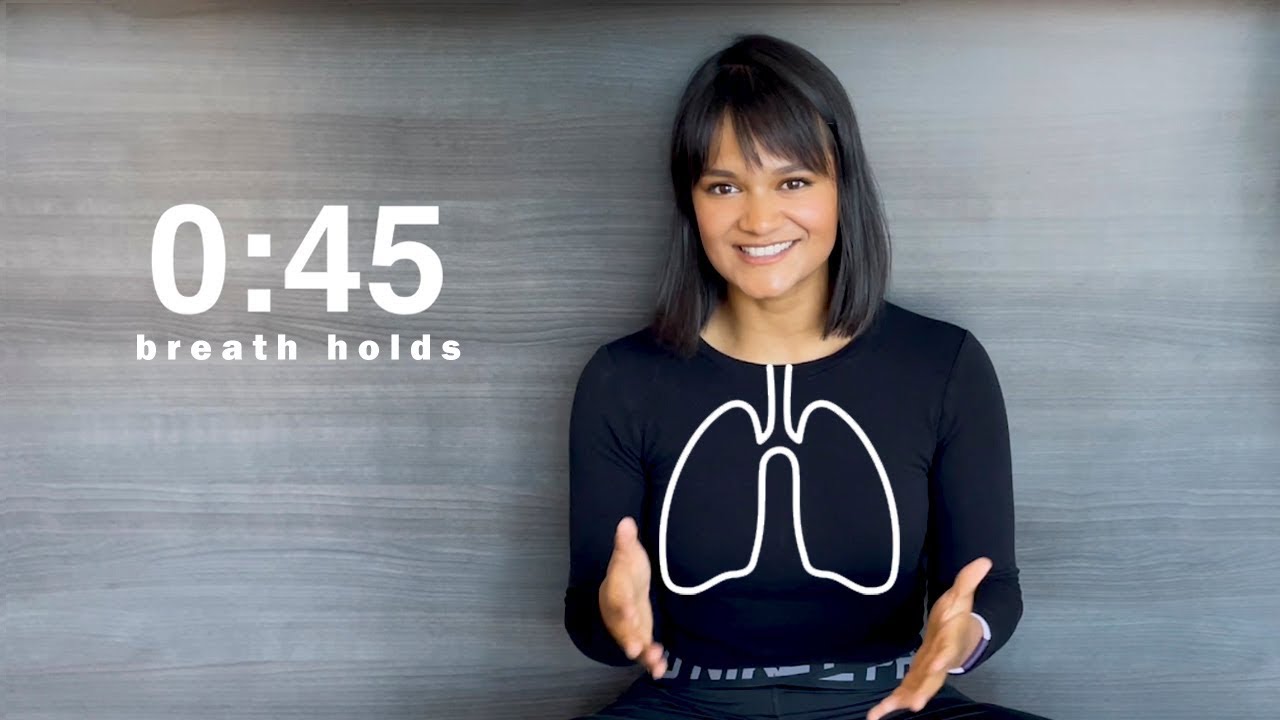
• The exercise includes six intervals, with a 45-second breath hold, gradually reducing rest times.
• Laying down maximizes lung expansion, but seated practice is also effective.
⚖️ The Law:
• Proper breath control reduces stress—slower, controlled breathing signals the nervous system to relax.
• Interval-based breathing strengthens endurance—progress comes from gradually increasing breath-hold times.
• Posture impacts breath efficiency—lying down allows for deeper, more effective inhalations.
🔮 And So:
• Our discomfort with breath-holding is psychological as much as physical.
• The breath is a reflection of our internal state—mastering it gives us control over stress and anxiety.
• Practicing breathwork builds self-awareness, discipline, and resilience.
💭 “If we can learn to stay calm under breath-holding stress, how much more could we handle life’s bigger stresses?”
1C. Breath Awareness: The First Step to Mastery
📌 02:47
📝 The Point:
• Soft, controlled breathing leads to better lung function—the quieter and steadier, the more control you develop.
• Breath awareness is a form of meditation, allowing us to scan the body for tension and release it.
• The quality of each breath matters more than the quantity.
⚖️ The Law:
• Shallow breathing leads to poor oxygen absorption—deep belly breaths improve circulation and energy levels.
• Controlled breath = controlled mind—slowing the breath slows overactive thoughts.
• The less effort in breathing, the more efficient the lungs become.
🔮 And So:
• By simply observing the breath, we take the first step toward greater awareness and control.
• Learning to breathe efficiently is a direct path to better physical and mental health.
• Breath mastery can transform not just workouts, but daily life.
💭 “What if the secret to a healthier, calmer life was as simple as the way we breathe?”
1D. The Relationship Between Breath and Stress
📌 04:40
📝 The Point:
• Holding the breath isn’t passive—it’s an active meditation that teaches us how to regulate stress responses.
• If you feel lightheaded, you’re likely breathing too fast or too shallow.
• Slowing the breath enhances focus, resilience, and control over emotional reactions.
⚖️ The Law:
• Fast, shallow breathing triggers stress responses.
• Slower breathing promotes relaxation and mental clarity.
• Conscious breathwork can rewire how we handle stress.
🔮 And So:
• The breath is a built-in stress management tool—learning to use it gives us control over how we react to life.
• Shifting from reactive to controlled breathing can completely change our emotional state.
• We have more power over our stress than we realize—it starts with awareness.
💭 “If a simple breath can calm our mind, what else could we influence by mastering our physiology?”
1E. The Final Breath Hold: Pushing Boundaries
📌 06:06
📝 The Point:
• The final breath hold is an opportunity to see how far you’ve progressed.
• The goal is not perfection, but awareness—every session teaches us something new.
• Breath control extends beyond exercise—it’s a way to unlock untapped energy.
⚖️ The Law:
• Breathwork is a process, not a destination—improvement comes with practice.
• Our limits are often self-imposed—challenging them leads to breakthroughs.
• Physical endurance is tied to mental endurance—building one strengthens the other.
🔮 And So:
• Even a small improvement in lung capacity can translate to greater endurance in daily life.
• The more we train ourselves to stay calm under breath-holding stress, the more control we gain over other life challenges.
• This practice is not just about breathing—it’s about understanding how we handle discomfort and growth.
💭 “If every breath is a choice between control and chaos, which will you choose?”
🔥 Final Thought: Breathwork as a Gateway to Mastery
📌 09:40
📝 The Point:
• Breathwork is one of the simplest yet most powerful ways to enhance both physical and mental well-being.
• Through consistent practice, we can increase our lung capacity, focus, and ability to remain calm under pressure.
• Mastering the breath means mastering energy, endurance, and resilience.
⚖️ The Law:
• What we control, we improve—intentional breathwork leads to stronger lungs and a calmer mind.
• Discipline in breathing leads to discipline in other areas of life.
• Mastery comes from repetition—the more we practice, the more effortless it becomes.
🔮 And So:
• Breathwork isn’t just about holding air—it’s about holding presence, awareness, and control.
• If something as simple as breathing can change our physiology, imagine what else we could transform through conscious effort.
• True power lies in learning how to regulate our internal state, no matter what’s happening externally.
💭 “If the way you breathe determines the way you live, how will you choose to breathe from now on?”