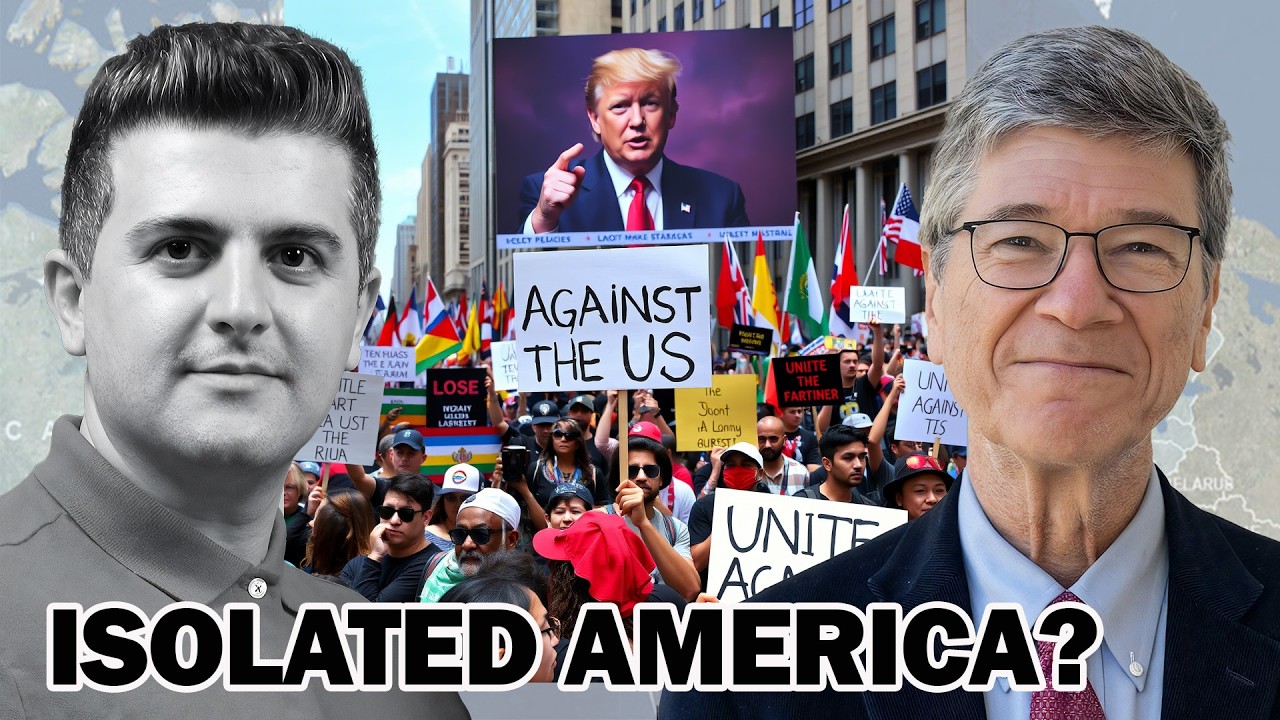
Trump’s Global Fallout: How Bluster, Proxy Wars, and Blind Allegiances Are Collapsing U.S. Foreign Credibility
#QuickNews
Time Interval: 00:00 – 35:31
✍️ Writers and Respondents
• Prof. Jeffrey Sachs: Economist, political analyst, vocal critic of U.S. foreign policy. Offers a sweeping indictment of Trump’s international actions and alignments.
• Host/Interviewer: Journalist posing questions about the Middle East, U.S. strategy, and global relations.
• Implied figures: Donald Trump (former U.S. President), Benjamin Netanyahu (Israeli PM), European leaders (Macron, Starmer, Scholz), and various national governments (Iran, Syria, Russia, Lebanon, etc.)
Summary and Analytical Points
1A. The U.S. Foreign Policy Hijacked by Extremism
📝 The Point:
• Sachs suggests U.S. foreign policy in the Middle East is no longer about American interests but serves the goals of Israeli extremists.
• The U.S. enabled unchecked violence in Gaza and escalated tensions with Iran through proxy actions.
• Trump’s alignment with Netanyahu overrides traditional diplomacy.
⚖️ The Law:
• Sovereignty should ensure national interest governs foreign policy.
• International humanitarian law demands proportionality in conflict.
• Ceasefire obligations must be honored to prevent war crimes.
🔮 And So:
• The U.S. risks becoming a tool of foreign hardliners.
• Its moral authority is fractured globally.
• Escalation without restraint may provoke regional collapse.
Question: What happens when a superpower no longer defines its own destiny—but follows another’s vengeance?
1B. Killing Diplomacy: The Demise of the Iran Nuclear Deal
📝 The Point:
• The JCPOA (Joint Comprehensive Plan of Action) was sabotaged by Trump, ignoring Iran’s overtures for peace.
• Sachs blames Netanyahu’s pressure for the deal’s collapse.
• Iran had adhered to peaceful terms since 2003.
⚖️ The Law:
• International treaties are binding under diplomacy ethics.
• Sanctions regimes must align with verifiable violations.
• Pre-emptive aggression without legal justification violates UN norms.
🔮 And So:
• Peaceful solutions were deliberately abandoned.
• The West’s distrust fuels perpetual hostility.
• Ignoring diplomacy hardens resistance.
Question: Why burn bridges with a nation seeking dialogue—unless the aim was never peace?
1C. Middle East Firestorm: Proxy Wars and Expansionist Fantasies
📝 The Point:
• Sachs asserts that Israel aims to dominate the Middle East with U.S. backing.
• The strategy includes wars in Lebanon, Syria, Yemen, and Iran.
• Peace is replaced by militarized domination.
⚖️ The Law:
• Sovereign equality forbids foreign-imposed regime changes.
• Self-determination protects nations from forced control.
• Ethnic cleansing and mass displacement are crimes against humanity.
🔮 And So:
• U.S.-Israel policies institutionalize endless conflict.
• Peace becomes strategically undesirable.
• Stability is sacrificed for geopolitical hegemony.
Question: Can the world afford another century defined by conquest masquerading as security?
1D. Europe: Paralysis and Puppetry
📝 The Point:
• Europe, especially France and Britain, is portrayed as incoherent, war-hungry, and blindly obedient to Washington.
• Sachs blasts their failure to initiate diplomacy with Russia.
• Elections are suppressed, leaders unpopular, and military build-ups intensify.
⚖️ The Law:
• EU foreign policy should reflect collective sovereignty, not U.S. influence.
• Democratic elections must be protected from political sabotage.
• Diplomatic engagement is required under international peace frameworks.
🔮 And So:
• Europe’s silence fuels more destruction.
• Sovereignty is traded for alignment with failure.
• Leadership is detached from public will.
Question: How long can Europe support wars its people oppose without losing its democratic soul?
1E. Trump’s Tariffs and Global Isolation
📝 The Point:
• Trump’s tariff-heavy policies isolate the U.S. economically and diplomatically.
• Sachs argues tariffs won’t fix trade deficits but will alienate allies.
• U.S. may be left out of future global trading systems.
⚖️ The Law:
• Free trade agreements promote mutual benefit and stability.
• Unilateral tariffs violate trade norms under WTO.
• Economic retaliation is a likely consequence of protectionism.
🔮 And So:
• America’s economic leadership is crumbling by design.
• The world is banding together—against U.S. policy.
• U.S. credibility as a global partner is fading.
Question: What nation leads when no one wants to follow?
1F. Iran vs. Syria: Misjudging Strength
📝 The Point:
• Sachs argues that unlike Syria, Iran is an ancient, formidable civilization with serious military capability.
• War with Iran wouldn’t be another proxy skirmish—it could ignite World War III.
⚖️ The Law:
• Self-defense rights must respect proportionality and context.
• Aggression against powerful nations risks global escalation.
• Strategic alliances, like Iran-Russia, complicate regional war.
🔮 And So:
• Miscalculating Iran’s strength is catastrophic.
• A war here isn’t regional—it’s global peril.
• Nuclear escalation risks are real.
Question: What happens when arrogance meets a civilization older, wiser, and better prepared?
Glossary
• JCPOA: Joint agreement to limit Iran’s nuclear program in exchange for lifting sanctions.
• Tariffs: Taxes on imports that can start trade wars.
• Hegemony: Dominant leadership or influence over others, often by force.
• Proxy War: A war instigated by major powers but fought by smaller allies.
• Ceasefire: A temporary suspension of fighting.
Commands
• [L] Expand summary
• [A] Write an educational article
• [D] Create conclusion diagram
• [T] Assess my knowledge of the video through a multiple-choice quiz
• [I] Indicate timestamps