
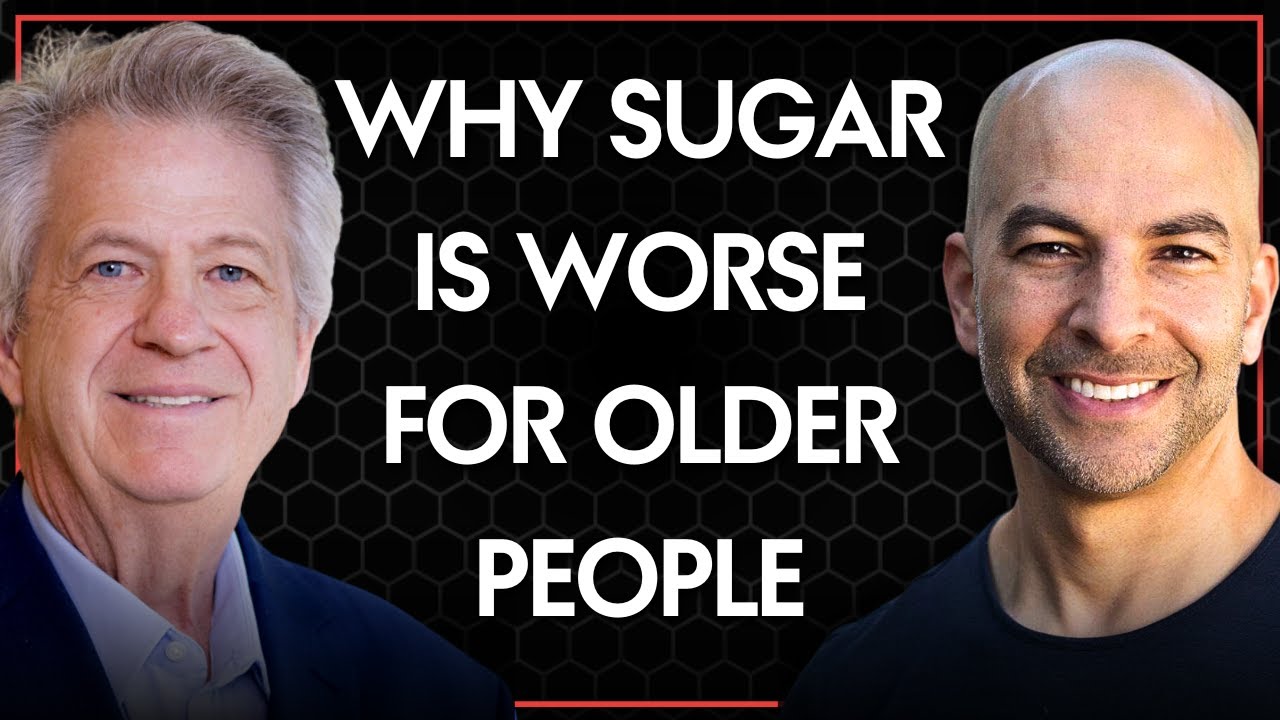
🍭 The Hidden Dangers of Sugar as You Age: How It Impacts Metabolism, Mitochondria, and Disease Risk
TL;DR:
📌 As we age, our bodies become less resilient to sugar due to mitochondrial decline, insulin resistance, and metabolic shifts—increasing the risk of obesity, diabetes, heart disease, and neurodegenerative disorders. The good news? You can reverse and prevent these effects with targeted strategies.
⏳ Save 60+ minutes by reading this guide, which condenses the full interview into an actionable plan to mitigate sugar’s impact on aging.
🔬 Why Sugar Impacts Older Adults Differently
When you’re young, your body is more efficient at processing glucose (a simple sugar that fuels your cells). However, with aging, your mitochondria (the energy-producing structures inside your cells) become less efficient, making it harder for your body to handle sugar properly.
🔗 📊 Why Sugar Sensitivity Increases with Age 📌 (01:00)
🌟 Key Factors That Change with Aging:
✔ Mitochondrial Decline: Aging weakens mitochondria, reducing ATP (energy) production. ⚡
✔ Increased Insulin Resistance: Cells struggle to absorb glucose efficiently, leading to high blood sugar. 🩸
✔ Higher Fructose Absorption: The body becomes better at absorbing fructose, increasing fat storage. 🍩
✔ Menopause’s Role: Estrogen helps regulate glucose, so after menopause, sugar sensitivity worsens. 👩⚕️
🔗 ⚡ How Mitochondria Affect Sugar Metabolism 📌 (04:00)
🚨 The Health Risks of Sugar as You Age
1️⃣ Sugar & Mitochondrial Dysfunction 🏭⚡
✅ High sugar intake = More oxidative stress in mitochondria
✅ Damaged mitochondria = Less ATP (energy) production & more fatigue
✅ Fructose overconsumption can shrink mitochondria, reducing efficiency
🔗 🏥 Sugar & Mitochondrial Damage 📌 (07:00)
2️⃣ Sugar & Weight Gain 🍔
✅ Fructose triggers fat storage by causing oxidative stress
✅ Aging reduces metabolic flexibility, making it harder to burn stored fat
✅ Even without overeating, excessive sugar intake leads to weight gain
🔗 ⚖️ How Sugar Contributes to Obesity 📌 (11:00)
3️⃣ Sugar & Cognitive Decline 🧠
✅ Chronic sugar intake = Increased risk of Alzheimer’s (Type 3 Diabetes)
✅ Fructose promotes inflammation, which damages neurons
✅ Elevated blood sugar levels reduce brain plasticity and memory function
🔗 🧠 Sugar’s Role in Brain Aging 📌 (15:00)
4️⃣ Sugar & Diabetes Risk 🩸
✅ High blood sugar damages blood vessels, increasing disease risk
✅ Insulin resistance = Cells no longer respond to insulin, leading to diabetes
✅ Cutting sugar can dramatically reduce diabetes progression
🔗 🩸 Sugar & Insulin Resistance 📌 (19:00)
🏆 How to Reverse Sugar’s Impact: 5-Step Action Plan
🚀 Step 1: Reduce Fructose Intake 🍏
✔ Avoid high-fructose foods: Soda, fruit juices, processed snacks 🚫
✔ Eat whole fruits instead of fruit juices: The fiber slows sugar absorption 🍓
✔ Monitor added sugars: Check food labels for hidden sugar sources 🔍
🔗 🍎 How to Cut Down on Fructose 📌 (22:00)
🚀 Step 2: Improve Mitochondrial Health 🦠
✔ Exercise Regularly: HIIT, strength training & Zone 2 cardio boost mitochondrial efficiency 🏋️
✔ Try Intermittent Fasting (IF): Promotes mitochondrial renewal & fat burning ⏳
✔ Increase Antioxidants: Dark leafy greens, turmeric, and green tea fight oxidative stress ☕
🔗 ⚡ How to Restore Mitochondria 📌 (26:00)
🚀 Step 3: Balance Blood Sugar Levels 🩸
✔ Use a Continuous Glucose Monitor (CGM): Tracks real-time blood sugar responses 📊
✔ Time Carbs Around Workouts: Eating carbs post-exercise minimizes insulin spikes 🍞
✔ Eat More Protein & Fiber: Slows sugar absorption & reduces cravings 🥩
🔗 📊 Blood Sugar Tracking for Longevity 📌 (29:00)
🚀 Step 4: Optimize Sleep & Stress Reduction 😴
✔ Get 7-9 Hours of Sleep: Poor sleep raises cortisol, worsening sugar metabolism 🌙
✔ Meditate & Reduce Stress: Chronic stress leads to more sugar cravings 🧘
✔ Regulate Circadian Rhythms: Morning sunlight exposure improves insulin sensitivity 🌅
🔗 💤 Sleep, Stress & Sugar Metabolism 📌 (32:00)
🚀 Step 5: Track & Monitor Metabolic Health 🏥
✔ Check Insulin & Glucose Levels: Fasting glucose, A1C, and insulin sensitivity markers 🔬
✔ Measure CRP (C-reactive protein): High CRP = Chronic inflammation risk 🚨
✔ Regular Bloodwork: Essential for tracking long-term metabolic trends 📉
🔗 📈 Tracking Your Health & Sugar Impact 📌 (35:00)
🎯 Your 30-Day Sugar Reset Plan
🚀 Step 1: Cut processed sugar & reduce fructose intake 🚫
🚀 Step 2: Walk 10,000 steps/day & do strength training 3x/week 🏃♂️
🚀 Step 3: Improve sleep by setting a fixed bedtime & avoiding screens before bed 😴
🚀 Step 4: Track blood sugar levels & adjust diet accordingly 🩸
🔗 🎥 Watch the Full Interview 📌
🔥 Want to Age Better & Stay Metabolically Healthy? Share this with someone who needs to control their sugar intake! 🚀💪