
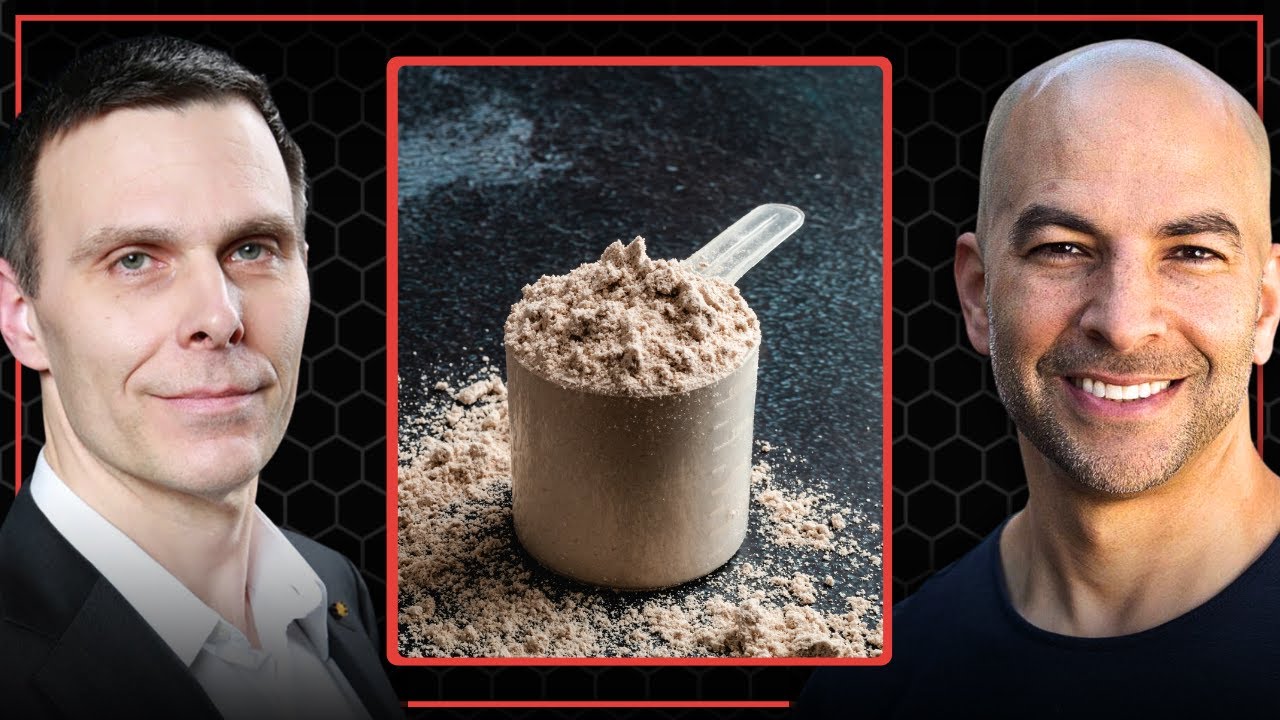
🏆 The Relationship Between Protein Intake and Aging: Insights from Matt Kaeberlein & Peter Attia 🎙️
TL;DR:
📌 Dr. Peter Attia and Dr. Matt Kaeberlein discuss the complex role of protein intake in aging, muscle maintenance, and longevity. The debate centers around whether higher protein intake is beneficial for maintaining muscle mass or if protein restriction can extend lifespan by inhibiting certain aging-related pathways like mTOR.
⏳ Save 60+ minutes by reading this in-depth summary with clear, actionable strategies to optimize protein consumption for longevity and metabolic health.
🔬 Why Protein Matters for Longevity & Healthspan
Protein plays a crucial role in muscle synthesis, metabolic health, and cognitive resilience. However, some animal studies suggest that protein restriction may extend lifespan. This has led to a debate about the optimal amount of protein for longevity.
🔗 📊 Protein Intake & Lifespan 📌 (00:30)
🌟 Key Longevity Factors Discussed:
✔ Muscle Mass = Longevity: More muscle mass reduces mortality risk & prevents frailty.
✔ Protein & mTOR Activation: Too much protein may activate mTOR, a pathway linked to aging.
✔ Animal vs. Human Studies: Protein restriction increases lifespan in mice, but does it apply to humans?
✔ RDA Protein Intake is Too Low: The recommended daily allowance (RDA) is not optimal for muscle maintenance.
🔗 ⚡ Muscle Mass & Longevity 📌 (04:00)
⚖️ The Protein Debate: Restriction vs. Optimization
1️⃣ The Case for High Protein Intake 💪
✅ Prevents Muscle Loss: Sarcopenia (age-related muscle loss) increases frailty and risk of death.
✅ Supports Metabolic Health: Higher protein intake improves insulin sensitivity and blood sugar control.
✅ Improves Physical Performance: Maintaining muscle strength helps with mobility and longevity.
🔗 🏋️♂️ Why Strength Training & Protein Are Key 📌 (07:00)
📌 Key Takeaway: Dr. Attia suggests consuming 1g of protein per pound of body weight, distributed evenly across 4 meals to maximize muscle synthesis.
2️⃣ The Case for Protein Restriction 🚫
🔬 Some animal studies suggest that restricting protein—especially methionine & branched-chain amino acids (BCAAs)—may extend lifespan by reducing mTOR activation.
🔗 🔬 The Science Behind Protein Restriction 📌 (11:00)
✅ Reduces mTOR Overactivation: mTOR plays a role in aging, but does restricting it improve lifespan in humans?
✅ Increases Autophagy: Lower protein levels may enhance cellular cleanup processes.
✅ May Reduce Cancer Risk: High protein intake has been linked to certain types of cancer.
📌 Key Takeaway: While rodent studies suggest protein restriction extends lifespan, human data is inconclusive.
🏆 Optimizing Protein for Longevity: Actionable Takeaways
🚀 Step 1: Assess Your Protein Needs
✔ If you want maximum muscle retention, aim for 1g of protein per pound of body weight.
✔ If you prioritize longevity-focused restriction, reduce protein slightly (but don’t go below 0.8g/kg!).
✔ Timing Matters: Distribute protein intake across multiple meals (~40g per meal).
🔗 🍽️ Protein Timing & Muscle Synthesis 📌 (14:00)
🚀 Step 2: Choose High-Quality Protein Sources
✔ Best Animal Sources: Grass-fed beef, pasture-raised eggs, wild-caught fish 🥩🍳🐟
✔ Best Plant Sources: Lentils, chickpeas, quinoa, tempeh 🌱
🔗 🥦 Best Protein Sources for Longevity 📌 (19:00)
🚀 Step 3: Monitor Your mTOR Activation
✔ Use Intermittent Fasting (IF) to balance mTOR activation & autophagy.
✔ Train with Resistance & Cardio to optimize muscle & metabolic health.
🔗 🏋️♂️ Exercise & Protein Optimization 📌 (22:00)
🚀 Step 4: Understand Your Individual Response
✔ Use a CGM (Continuous Glucose Monitor) to assess metabolic health.
✔ Monitor strength, muscle mass, and inflammation markers.
🔗 🧪 Personalized Nutrition & Longevity 📌 (26:00)
🎯 Final Verdict: Should You Eat More or Less Protein?
📌 If your goal is longevity-focused muscle retention: Prioritize high-quality protein but avoid excessive intake in one sitting.
📌 If your goal is metabolic health: Combine protein intake with fasting & exercise for optimal results.
📌 If you are over 50: Higher protein intake helps prevent sarcopenia (muscle loss).
📌 If you are focused on anti-aging: Consider balancing protein intake with fasting & mTOR modulation.
🔗 🎥 Watch the Full Interview 📌
🔥 Want More Science-Backed Longevity Tips? Share this with someone who wants to optimize their protein intake! 🚀💪