
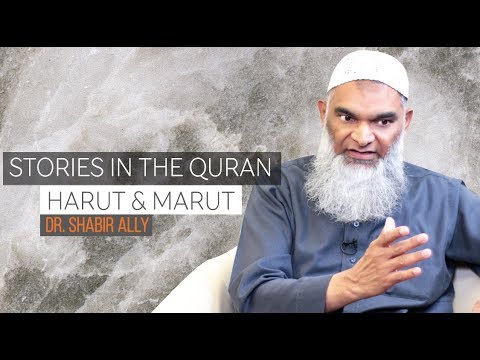
📖 Uncommon Stories in the Quran: Harut & Marut (Dr. Shabir Ally)
📌 Key Moments with Hyperlinks
• Introduction to Harut & Marut in the Quran – 00:31
• Who Were Harut & Marut? The Quranic Narrative – 01:03
• What Did Harut & Marut Teach? – 01:32
• Were Harut & Marut Really Teaching Magic? – 02:07
• How Could Angels Teach a Forbidden Knowledge? – 02:38
• Alternative Interpretations: Psychological or Social Knowledge? – 03:08
• Hadith Narrations & Influence of Non-Muslim Sources – 03:41
• The Allegorical Story of the Angels & the Beautiful Woman – 04:12
• Different Versions of the Story: The Venus Connection – 05:15
• The Babylon Cave Story: Fiction or Fact? – 05:46
• Lessons from the Story: Knowledge, Morality & Responsibility – 07:09
• Biblical & Talmudic Parallels to Harut & Marut – 08:28
• Final Reflections on Theological & Historical Interpretations – 09:00
🏆 11 Key Insights from the Discussion on Harut & Marut
1️⃣ Who Were Harut & Marut? Quranic Context
🔍 Key Point: Harut & Marut are mentioned in Surah Al-Baqarah (2:102) as two angels in Babylon who were given knowledge as a test for humanity.
🧩 Principle: The Quran describes them warning people not to misuse the knowledge they provided, implying that their role was not to promote magic, but rather to serve as a trial.
💡 Inference: The role of Harut & Marut remains ambiguous, leaving room for multiple interpretations.
2️⃣ Did Harut & Marut Actually Teach Magic?
🔍 Key Point: The Quran states that “Satans taught magic”, and then mentions what was revealed to Harut & Marut—but does not explicitly say that the angels taught magic themselves.
🧩 Principle: Some scholars argue that the angels were teaching something else, perhaps related to human psychology or social manipulation.
💡 Inference: Interpreting their role as direct teachers of magic could be stretching the meaning of the verse.
3️⃣ Angels Teaching Forbidden Knowledge – A Contradiction?
🔍 Key Point: Angels are traditionally associated with good and obedience, so the idea of them introducing harmful knowledge is paradoxical.
🧩 Principle: One explanation is that they merely demonstrated knowledge of manipulation so people could recognize and avoid it—like warning signs rather than instructions.
💡 Inference: They were not promoting magic, but exposing its dangers, yet people misused the knowledge.
4️⃣ An Alternative View: Were They Teaching Psychological Influence?
🔍 Key Point: Rather than literal magic, Harut & Marut may have revealed psychological techniques to manipulate emotions and relationships.
🧩 Principle: This knowledge itself is not inherently evil, but its misuse—such as causing marital discord—is problematic.
💡 Inference: The real test was how humans chose to use this knowledge.
5️⃣ Hadith Narrations & Non-Muslim Influence
🔍 Key Point: Many hadith reports about Harut & Marut do not trace back to the Prophet Muhammad (PBUH), but rather to Jewish or Christian sources.
🧩 Principle: Early Muslims may have adopted elements from Talmudic or Biblical traditions when explaining the Quranic narrative.
💡 Inference: Not all classical interpretations are authentic Islamic teachings; some may have been influenced by external sources.
📌 Watch the Historical Analysis
6️⃣ The Story of the Angels & the Beautiful Woman
🔍 Key Point: A well-known legend describes Harut & Marut being tested by a woman, leading to their downfall.
🧩 Principle: Some scholars argue that this tale is allegorical, warning about the dangers of arrogance and temptation.
💡 Inference: It serves as a moral lesson rather than a historical event.
7️⃣ The Venus Connection: Myth or Reality?
🔍 Key Point: Some versions of the story claim that the woman was transformed into the planet Venus as a divine punishment.
🧩 Principle: This narrative closely resembles Greek and Babylonian mythology, raising doubts about its authenticity in Islamic tradition.
💡 Inference: This aspect of the story likely stems from external mythological influences rather than Islamic sources.
8️⃣ The Babylon Cave: An Ongoing Mystery
🔍 Key Point: Some medieval scholars believed that Harut & Marut were physically chained in a cave in Babylon, awaiting the Day of Judgment.
🧩 Principle: This idea is based on folklore rather than the Quran or authentic hadith.
💡 Inference: Stories of people claiming to have visited the cave are unverifiable and likely fictional.
9️⃣ What Can We Learn from the Story of Harut & Marut?
🔍 Key Point: The primary lesson is that not all knowledge is beneficial; wisdom is knowing how to use it correctly.
🧩 Principle: Islam encourages the pursuit of “beneficial knowledge” that uplifts society, rather than knowledge that causes harm.
💡 Inference: We should seek guidance from Allah to use our knowledge responsibly.
🔟 Parallels in Other Religious Traditions
🔍 Key Point: Similar stories of fallen angels exist in the New Testament and Jewish Talmud, suggesting a shared historical tradition.
🧩 Principle: The Quranic story of Harut & Marut may be referencing existing Jewish narratives but with a distinct theological emphasis.
💡 Inference: This highlights the Quran’s role in clarifying misconceptions from previous scriptures.
1️⃣1️⃣ Final Reflections: Theological & Historical Interpretations
🔍 Key Point: Our understanding of religious stories must evolve with modern scholarship and critical thinking.
🧩 Principle: Islamic scholarship should distinguish between verified sources and cultural influences.
💡 Inference: A balanced approach respects tradition while incorporating rational analysis.
🎯 Final Takeaways
✅ Harut & Marut’s story is a test, not an endorsement of magic.
✅ The angels may have taught psychological or social knowledge rather than sorcery.
✅ Many hadith reports on this topic originate from non-Muslim sources.
✅ The Quran warns against using harmful knowledge irresponsibly.
📌 Commands: How Would You Like to Proceed?
📜 [A] Write an educational article
📊 [D] Create a summary diagram
🎯 [T] Test your knowledge with a quiz
⏳ [I] Get more timestamps for key insights
Let me know how you’d like to continue! 🚀