
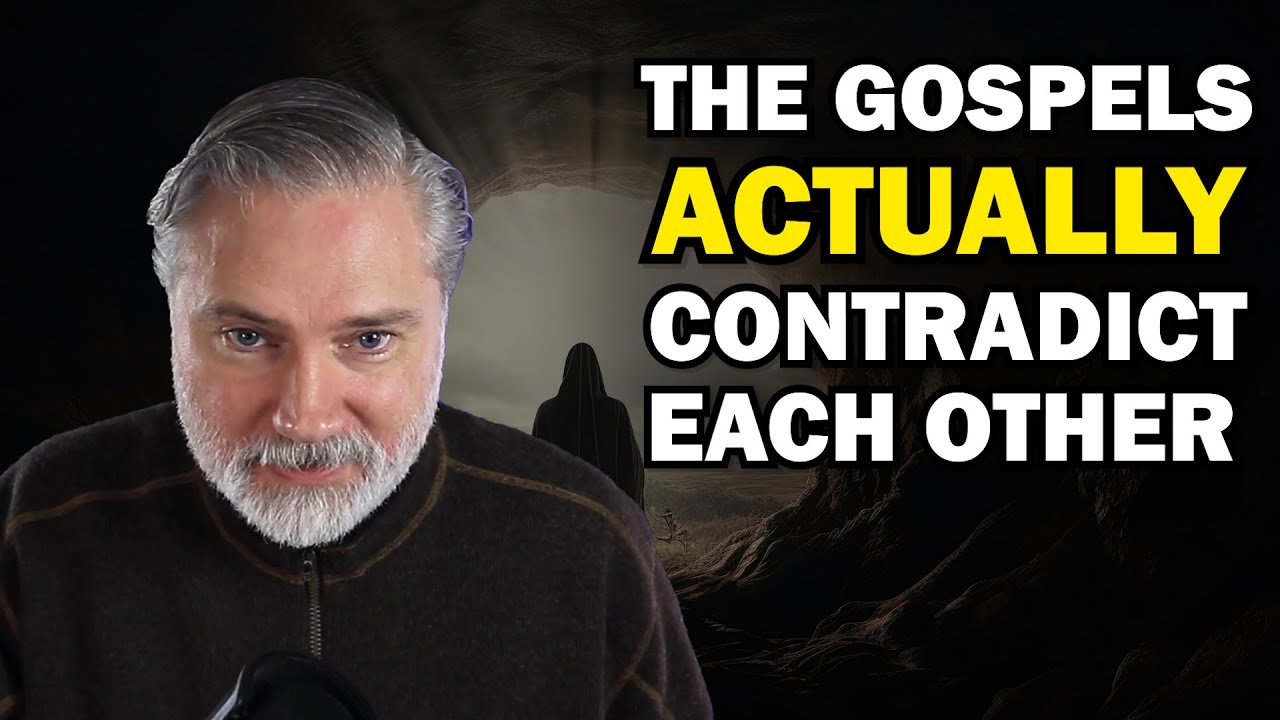
📜 Christians Struggle to Explain Away Bible Contradictions
A Deep Dive into Biblical Contradictions & Apologetics’ Defenses
🔗 Watch Full Video: Christians Can’t Explain Away Bible Contradictions
🔍 1️⃣ The Nature of Bible Contradictions
⏳ Introduction to Contradictions
• The video asserts that the Bible contains direct contradictions, not just “alleged” ones as apologists claim.
• Focuses on the empty tomb narratives in the Gospels, which present four conflicting versions of the same event.
• Apologists attempt to harmonize contradictions using semantics, selective omissions, and literary techniques.
🔎 Inference: Superficial explanations don’t resolve deep contradictions; they only obscure them.
👥 2️⃣ The Empty Tomb Stories Are Inconsistent
⏳ Comparing the Gospels’ Accounts
• Who went to the tomb?
• Matthew: Mary Magdalene & another Mary
• Mark: Mary Magdalene, Mary (James’ mother), and Salome
• Luke: Mary Magdalene, Joanna, Mary (James’ mother), plus unnamed women
• John: Mary Magdalene alone
• What did they see?
• Matthew & Mark: Angel(s)
• Luke: Two men
• John: Two angels, but only after Peter & John left
🔎 Inference: The variations cannot be harmonized naturally—they reflect different traditions, not a single historical account.
🧐 3️⃣ Apologists Use “Spotlighting” to Excuse Differences
⏳ Apologists’ Defense: Selective Storytelling
• Spotlighting: A literary technique where authors focus on one figure while ignoring others.
• Apologists argue: If one Gospel mentions only Mary Magdalene, it doesn’t mean others weren’t there.
• Counterpoint:
• The stories don’t merely omit people; they contradict who was present.
• The events described differ, making it impossible to reconcile them into one narrative.
🔎 Inference: Spotlighting is a weak explanation for outright contradictions in key details.
👼 4️⃣ How Many Angels Were at the Tomb?
• Mark & Matthew: One angel/man spoke to the women.
• Luke & John: Two angels were present.
• Apologists’ defense:
• “If there were two, then there was at least one!”
• “One Gospel just didn’t mention the second angel.”
• Counterpoint: If one angel made the announcement, why do some Gospels insist two spoke?
🔎 Inference: It’s not about omission—it’s about different versions of the same event.
🏛️ 5️⃣ Inside or Outside? Where Were the Angels?
• Matthew: Angel sat outside the tomb, on the stone.
• Mark, Luke, & John: Angels appeared inside the tomb.
• Apologists’ defense:
• “Maybe the angel moved inside, and Matthew didn’t mention it.”
• “The order of events isn’t necessarily chronological.”
• Counterpoint: Matthew gives a clear sequence: Angel descends, rolls away the stone, sits outside, and speaks.
🔎 Inference: Harmonizing requires ignoring what the text actually says.
⏳ 6️⃣ When Did the Women Learn of Jesus’ Resurrection?
⏳ Announcement Timeline Discrepancy
• Matthew & Mark: Women were told immediately upon arrival.
• Luke: Women entered the tomb first, then were told.
• John: Mary learns only after Peter & John leave—directly from Jesus, not an angel.
🔎 Inference: The order of events fundamentally changes in each account, making harmonization impossible.
👀 7️⃣ Did the Women Immediately Tell the Disciples?
⏳ Contradictory Reports on Spreading the News
• Mark (earliest Gospel): Women fled in fear and told no one (Mark 16:8).
• Matthew, Luke & John: Women told the disciples immediately.
🔎 Inference: If Mark’s “they told no one” is true, the other Gospels contradict it.
🏃 8️⃣ Who Arrived at the Tomb First?
• Synoptics: Women arrive first, see the angel(s), and then leave.
• John: Mary Magdalene sees nothing, runs to Peter & John, and they arrive first.
🔎 Inference: The sequence of discovery is completely different across accounts.
💡 9️⃣ Apologists Admit Gospel Writers Had Different Sources
⏳ William Lane Craig’s Concession
• Craig: “The Gospels used different sources which led to variations.”
• Counterpoint: If sources contradicted each other, how can the Gospels be perfectly accurate?
🔎 Inference: Craig’s statement admits the Bible isn’t internally consistent.
🏛️ 🔟 Did the Gospel Writers “Embellish” the Story?
⏳ Craig’s Oral Tradition Defense
• Craig: “Oral traditions keep the core story but allow secondary details to change.”
• Problem: This undermines biblical inerrancy—if details can be changed, what else was altered?
🔎 Inference: Craig inadvertently confirms that the Gospels evolved over time.
🎭 🔟 The Apologetic Dance: Shifting Standards
⏳ Conveniently Changing Claims
• When contradictions are pointed out, apologists say:
• “It’s okay—details change in oral tradition!”
• But when defending Bible inerrancy, they say:
• “The Bible is perfect, divinely inspired, and 100% true.”
🔎 Inference: Apologists switch arguments based on convenience.
🎯 Key Takeaways: What Do These Contradictions Mean?
✅ The empty tomb accounts cannot be harmonized without ignoring clear contradictions.
✅ Apologists rely on semantic loopholes (spotlighting, rearranged events) to explain contradictions.
✅ When forced to address real issues, they retreat to claims of oral tradition and embellishments.
✅ If the Bible allows for changing details, how can it be inerrant and divinely perfect?
🔗 Watch Full Video: Christians Can’t Explain Away Bible Contradictions 📜