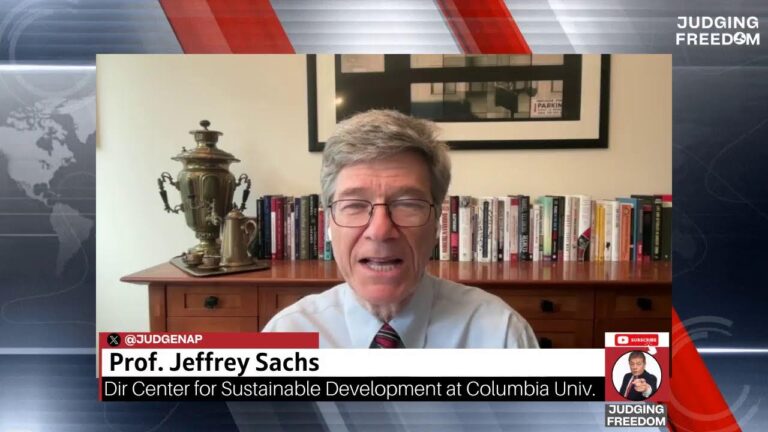

🚨 “The Ireland-Israel Tension: Are Irish Leaders Encouraging Anti-Semitism?” 🔥
📜 Breaking Down the Thought Process
🇮🇪 Ireland’s Political Shift and Israel’s Response
⏳ 00:00
- Statement: Ireland has become more vocal in its pro-Palestinian stance.
- Thought 1: Ireland officially recognized a Palestinian state, alongside Norway and Spain.
- Thought 2: Ireland publicly backed South Africa’s genocide case against Israel at the ICJ.
- Thought 3: Israel responded by closing its embassy in Dublin and recalling its ambassador.
- Concluded Point: Diplomatic ties between Ireland and Israel have significantly deteriorated, leading to accusations of anti-Semitism.
💬 Rebuttal: Recognition of Palestine and support for legal action do not equate to hostility toward Jews. Many Jewish groups also critique Israeli policies.
🎭 Prejudicial Device: False Equivalence – Suggesting that opposing Israeli government policies is the same as opposing Jewish people.
📜 Philosophical Assumption: State = Religion – Assumes that Israel’s actions represent all Jewish people worldwide.
🕍 Chief Rabbi’s Concerns About Jewish Safety in Ireland
⏳ 02:05
- Statement: The Chief Rabbi of Ireland claims Jewish people no longer feel safe displaying their identity.
- Thought 1: Some Jewish students reportedly hide their heritage in Irish schools.
- Thought 2: The rise in anti-Israel sentiment has led to an increase in anti-Semitic incidents.
- Thought 3: Public Jewish symbols, like the Star of David, are now avoided for fear of hostility.
- Concluded Point: Jewish people in Ireland feel threatened, linking it to the government’s pro-Palestinian rhetoric.
💬 Rebuttal: While anti-Semitism must be condemned, criticism of Israeli policies is not inherently anti-Jewish. The distinction between state and people is essential.
🎭 Prejudicial Device: Association Fallacy – Suggests that criticism of Israel directly causes hostility toward Jews, ignoring broader social factors.
📜 Philosophical Assumption: Government Influence – Assumes political discourse directly translates into public sentiment and behavior.
🎙️ Irish Leadership’s Response: Diplomacy or Deflection?
⏳ 03:45
- Statement: Irish leaders reject claims of anti-Semitism, asserting their position is about human rights.
- Thought 1: Irish Prime Minister Simon Harris argues that Israel is using embassy closures as a distraction.
- Thought 2: He condemns Hamas’s attacks but emphasizes the suffering of Palestinian civilians.
- Thought 3: Ireland refuses to let its diplomatic stance be silenced, maintaining its commitment to Palestinian rights.
- Concluded Point: Ireland believes its criticism of Israel is about justice, not discrimination.
💬 Rebuttal: While advocating for human rights is crucial, Ireland’s sharp rhetoric may fuel tensions and alienate Jewish communities.
🎭 Prejudicial Device: Moral Framing – Positioning Ireland as a moral actor while dismissing concerns from Jewish leaders.
📜 Philosophical Assumption: Political Neutrality – Assumes Ireland’s stance is purely ethical, ignoring potential political motives.
⚔️ Ireland’s Engagement with Iran: A Strategic Contradiction?
⏳ 06:10
- Statement: Ireland has strengthened ties with Iran, a major adversary of Israel.
- Thought 1: In 2023, Ireland opened an embassy in Tehran, deepening diplomatic relations.
- Thought 2: Iranian officials were honored guests at Irish political conferences, while Israeli officials were excluded.
- Thought 3: This appears contradictory, as Iran funds groups that openly call for Israel’s destruction.
- Concluded Point: Ireland’s engagement with Iran undermines its claim of being neutral in the Israel-Palestine conflict.
💬 Rebuttal: Diplomatic relations with Iran do not necessarily indicate support for its extremist policies; many Western nations maintain dialogue with adversarial states.
🎭 Prejudicial Device: Guilt by Association – Suggesting that engaging with Iran means endorsing its stance on Israel.
📜 Philosophical Assumption: Diplomatic Integrity – Assumes that a nation must be consistent in its foreign policies at all times.
📚 The Role of Education: Propaganda or Perspective?
⏳ 08:50
- Statement: Irish school curriculums are accused of spreading anti-Israel narratives.
- Thought 1: A teachers’ group created an unofficial “Teachers for Palestine” curriculum.
- Thought 2: Some Jewish students reportedly feel bullied or ostracized in schools.
- Thought 3: Textbooks allegedly depict Israel negatively while portraying Islam as a peaceful religion.
- Concluded Point: Education in Ireland may be shaping anti-Israel biases in young minds.
💬 Rebuttal: While balanced education is crucial, ensuring fair representation in curricula is a broader issue that affects many topics, not just Israel-Palestine.
🎭 Prejudicial Device: Slippery Slope – Implies that any critique of Israel in education leads directly to anti-Semitism.
📜 Philosophical Assumption: Educational Objectivity – Assumes textbooks should remain entirely neutral, despite education often reflecting political perspectives.
⚖️ The Bigger Question: Is Ireland Promoting Anti-Semitism?
⏳ 10:00
- Statement: The Chief Rabbi argues that Ireland’s policies are fueling hostility against Jews.
- Thought 1: Pro-Palestinian protests in Dublin have included anti-Semitic chants.
- Thought 2: Jewish individuals feel less safe, even if Ireland lacks widespread violent incidents.
- Thought 3: There’s a fine line between anti-Zionism and anti-Semitism that some believe Ireland is crossing.
- Concluded Point: While Ireland may not intend to promote anti-Semitism, its rhetoric could be contributing to it indirectly.
💬 Rebuttal: Anti-Semitism is a global issue with complex causes; it cannot be solely attributed to Ireland’s foreign policy stance.
🎭 Prejudicial Device: Attribution Error – Blames Ireland’s government for a rise in anti-Semitism without considering other contributing factors.
📜 Philosophical Assumption: Causal Determinism – Assumes that political rhetoric directly causes public sentiment without intermediary factors.
📖 Glossary for Laypersons
- ICJ (International Court of Justice): A UN body that settles legal disputes between states.
- Zionism: A political movement advocating for a Jewish homeland in Israel.
- Hamas: A Palestinian militant group governing Gaza, labeled a terrorist organization by many countries.
- Guilt by Association: A logical fallacy where one is condemned based on their associations rather than their actions.
- Diplomatic Friction: When two countries experience increased tensions due to political disagreements.
📌 Final Takeaway: Where Does Ireland Stand?
🔹 Is Ireland’s foreign policy a genuine human rights stance or a politically motivated move?
🔹 Are Jewish concerns in Ireland valid, or is criticism of Israel being misinterpreted?
🔹 Can Ireland balance its pro-Palestinian position while ensuring Jewish citizens feel safe?
🔥 What do you think? Let’s discuss! 🔥