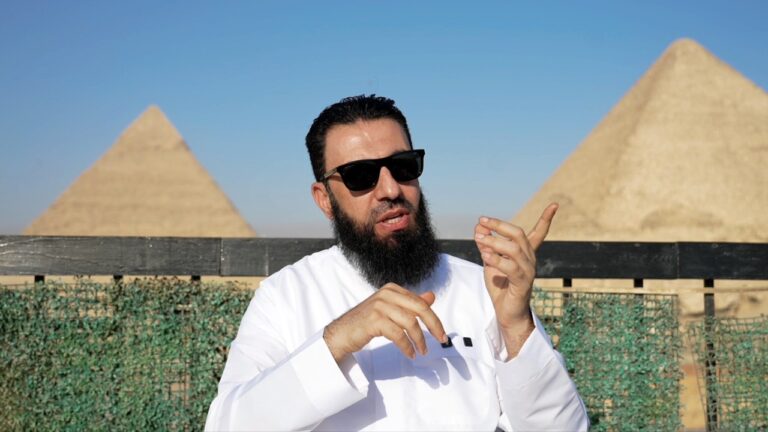
Reclaiming the Kalam Argument: Can Islam Defeat Craig’s Cosmology?
TL;DR (Time Saved: 90+ Minutes)
By reading this summary, you save over 90 minutes of video content and gain a deep understanding of how Kalam 3.0 challenges modern atheistic and Christian perspectives on God’s existence. This post uncovers how traditional Islamic theology is being reshaped to counter contemporary materialism and philosophical debates.
The Evolution of Kalam: From Traditional Theology to Modern Science
Understanding the Core Argument
• KALAM = ISLAMIC THEOLOGY: A discipline rooted in Quranic reasoning that defends religious beliefs using logic and philosophy.
• CRAIG’S KALAM COSMOLOGICAL ARGUMENT (KCA): A Christian philosopher, William Lane Craig, modernized the Kalam argument to support Christian theology, but does it align with Islamic thought?
• KALAM 3.0: Shaykh Hamza Karamali proposes an updated version of Kalam, refocusing on modern challenges like scientific materialism and quantum physics.
Historical Shifts in Kalam
1. Kalam 1.0 (Early Islamic Thought): Developed to counter Mutazilite sects, defending core Islamic beliefs.
2. Kalam 2.0 (Engagement with Greek Philosophy): Influenced by Aristotelian logic, adapting Islamic arguments to refute eternal universe theories.
3. Kalam 3.0 (Modern Era): Focused on scientific naturalism, arguing against atheistic materialism using contemporary science.
Refuting Craig’s Kalam: Key Issues & Gaps
1. The Core of the Argument
Craig’s argument states:
1. Everything that begins to exist has a cause.
2. The universe began to exist.
3. Therefore, the universe has a cause (God).
But where does Craig go wrong? His formulation is weak against materialist objections and leaves room for theological errors.
2. Craig’s Misstep: Christianizing the Argument
• Craig argues for a supernatural but contingent being—which aligns with Christian theology but contradicts Islamic monotheism.
• In Islam, God is not just a cause, but a necessary being—He cannot be dependent or enter time.
3. Islamic Response: The Argument from Contingency
• Everything in the universe is CONTINGENT (dependent on something else).
• A contingent chain cannot be infinite.
• There must be a NECESSARY BEING (God), independent of all causes.
• Craig’s failure: He focuses on causality, but ignores the necessity of God’s existence beyond time and space.
Scientific Materialism vs. Kalam 3.0
Why the Kalam Argument Needs an Update
1. Materialists believe the universe began to exist but DENY it had a cause.
2. Quantum physics and Big Bang discoveries challenge classical theistic arguments.
3. Modern atheists argue that “something can come from nothing” in quantum mechanics.
Kalam 3.0’s Response
• Refocus on CONTINGENCY instead of causality.
• Incorporate modern physics & philosophy into theological arguments.
• Address new atheist claims with contemporary scientific understanding.
Critical Insights & Key Takeaways
✅ Traditional Kalam focused on debating Greek philosophers—but today’s main opponent is scientific materialism.
✅ Materialists accept the Big Bang but reject a divine cause—Kalam 3.0 must disprove materialism first before arguing for God.
✅ Craig’s Kalam argument is incomplete—it fails to account for the necessity of God’s existence, opening the door for atheistic objections.
✅ Islamic theology provides a stronger metaphysical foundation than Craig’s Christianized version of the argument.
3 Products & Services That Can Help You Explore Further
1. Books on Kalam 3.0 – Expand your knowledge on modern Islamic theology by reading Hamza Karamali’s upcoming book on Kalam 3.0.
2. Online Courses on Islamic Philosophy – Join structured courses on theology and logic to strengthen your understanding of Islamic metaphysics.
3. Debate & Public Speaking Training – Improve your ability to articulate Islamic beliefs in philosophical discussions with experts.
This post gives you a powerful intellectual framework to understand Islamic theology’s response to modern scientific and philosophical challenges. Keep learning, keep questioning!