The Battle Within: Faith, Duty & Identity in Israel’s Orthodox Draft Crisis
Time Interval: 00:00–15:17
Summary
1a. A Sacred Calling Meets a National Demand
📌 00:00
📝 The Point:
• Orthodox youth enter military service not just to serve the state, but with the conviction they are serving God — a divine obligation reshaped into a national duty.
• The very act of enlistment is steeped in inner conflict: the military demands secular integration; the community demands spiritual insulation.
• Many Orthodox young men lose their religious identity in service — a cost their leaders deem too high.
⚖️ The Law:
• Service to country is not always synonymous with service to faith.
• The tension between individual belief and collective responsibility is timeless.
• When identity and duty collide, societies must negotiate not just policies but principles.
🔮 And So:
• Religious youth face a spiritual war before the battlefield even begins.
• Secular nationalism and divine devotion are sometimes opposing maps to belonging.
• The deeper the religious belief, the higher the risk of spiritual dislocation.
What do we truly ask of someone when we ask them to serve — their body, or their soul?
1b. A Community Defiant in Isolation
📌 01:07
📝 The Point:
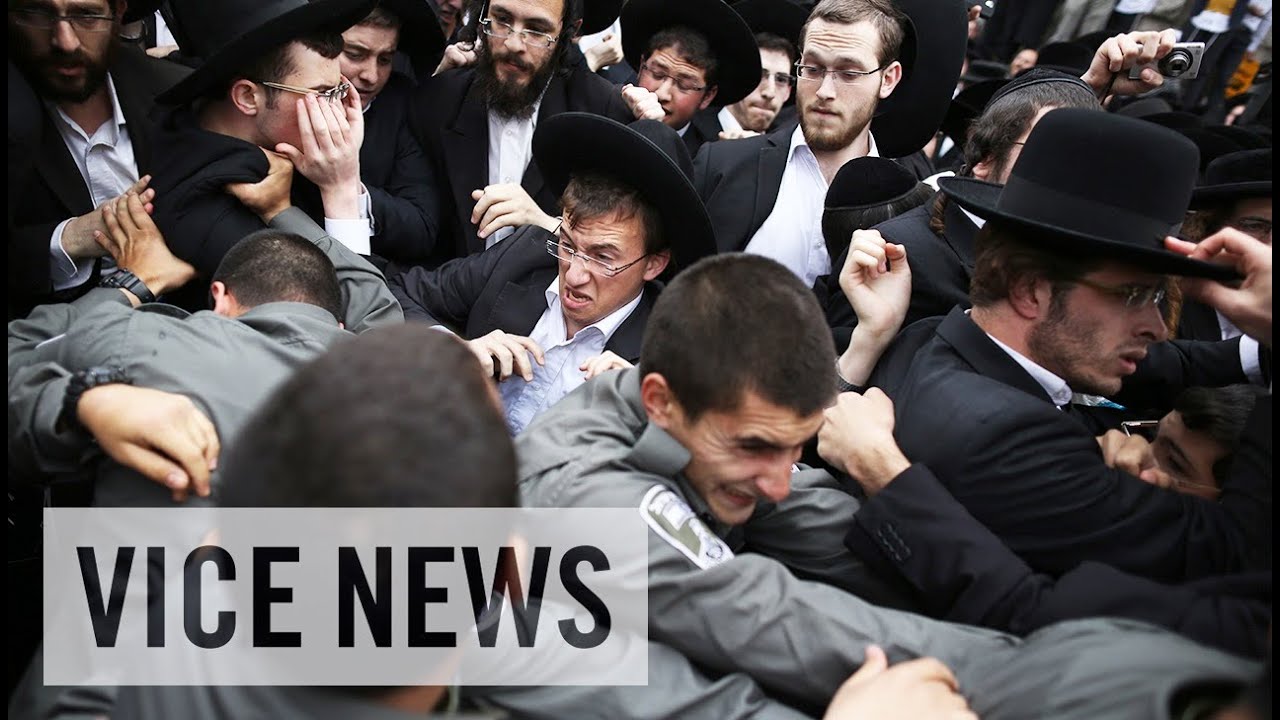
• The Haredi community, traditionally exempt from military service, erupted in protest as the state moved to enforce conscription.
• They view military life not just as secular, but morally polluting and spiritually corrosive.
• Posters liken conscription to being dragged into garbage — a stark metaphor for cultural contamination.
⚖️ The Law:
• Religious freedom is protected, but not absolute.
• Public service laws aim to be universal in democratic states.
• Deep communal values must be balanced with societal cohesion.
🔮 And So:
• Protests aren’t about the draft — they’re about identity survival.
• Resistance is framed not in political, but spiritual terms.
• To them, the draft feels like a forced spiritual exile.
Can a modern state truly accommodate radical sanctity within universal law?
1c. The Deal That Wasn’t Forever
📌 02:07
📝 The Point:
• The original statehood agreement exempted Haredi yeshiva students from military service, seeing Torah study as a vital pillar.
• What began as a symbolic exemption for a few hundred has grown into a loophole sheltering tens of thousands.
• The secular majority perceives this as unfair and economically unsustainable.
⚖️ The Law:
• Exemptions meant for survival shouldn’t become systems of avoidance.
• Demographic shifts turn temporary allowances into structural imbalances.
• The state has a right to reevaluate contracts under strain.
🔮 And So:
• What was once tolerated is now resented.
• Shared sacrifice feels skewed — fueling division.
• The burden of duty must evolve with demographics.
At what point does protection of tradition become abdication of equality?
1d. The Rift Widens: From Protest to Hostility
📌 03:40
📝 The Point:
• VICE journalists were met with open hostility in Haredi neighborhoods, a stark signal of the community’s rejection of outside scrutiny.
• Ultra-Orthodox factions like the Edah HaChareidis not only reject conscription, but the legitimacy of the state itself.
• Their resistance is not protest — it’s a declaration of religious sovereignty.
⚖️ The Law:
• Rejection of state authority places communities in a paradox: living within, yet not of, the nation.
• Tensions escalate when dissent turns insular and violent.
• Religious extremism often flourishes in isolation.
🔮 And So:
• The media is a threat because it exposes internal contradictions.
• The refusal to engage invites repression, not understanding.
• Dialogue breaks down when legitimacy is denied.
How does a society coexist with citizens who don’t recognize its very foundation?
1e. Torah Over Tanks: The Sacred Resistance
📌 05:42
📝 The Point:
• The Torah is not just scripture; it is life itself for Haredi Jews.
• Yeshivas are sacred spaces — conscription is seen as a desecration.
• For them, military service disrupts divine purpose.
⚖️ The Law:
• When faith and law conflict, priority becomes existential.
• Institutions become battlegrounds for meaning.
• Every society must ask where its moral compass points.
🔮 And So:
• The threat is not death, but assimilation.
• Preservation is seen as resistance, not neglect.
• Secular institutions become arenas of cultural erosion.
What do we risk losing when we ask people to serve — and what might they lose if they refuse?
1f. The Yehuda Experiment: Unity or Exception?
📌 06:13
📝 The Point:
• The Netzach Yehuda Battalion offers a unique space for Orthodox soldiers to serve without abandoning religious practices.
• It’s both a compromise and a proving ground.
• Many soldiers come from troubled paths, finding redemption and purpose in structured service.
⚖️ The Law:
• Integration models must reflect both flexibility and faith.
• Individual transformation doesn’t equate to community acceptance.
• Bridging divides requires cultural fluency, not just policy shifts.
🔮 And So:
• Redemption is personal, but stigma is communal.
• The army becomes a second chance, but not a new home.
• Religious duty can find harmony in national service — but not for all.
Can individual transformation spark a larger cultural shift — or remain an anomaly?
1g. The Hidden Price of Enlistment
📌 09:00
📝 The Point:
• Orthodox soldiers often face deep personal sacrifices: spiritual rituals neglected, familial ties strained, community exile.
• One soldier noted being spat on and violently rejected by fellow Jews — the pain is internal, not foreign.
• This isn’t just a decision to serve — it’s a step into social exile.
⚖️ The Law:
• Service entails sacrifice, but exile is another matter.
• Community pressure can shape — or shatter — identity.
• The cost of conscience must be acknowledged, not dismissed.
🔮 And So:
• The real battlefield is within.
• Enlistment can mean estrangement.
• The heart breaks in service as much as the body strains.
How can a society ask its youth to sacrifice when their own families see them as traitors?
1h. Caught in Crossfire: Youth as Collateral
📌 10:57
📝 The Point:
• Some Haredi boys flee home, unable to bear the emotional toll of joining the military.
• Though battalions are designed to preserve values, spiritual compromise is inevitable.
• These youth are torn between divine loyalty and civic obligation.
⚖️ The Law:
• Emotional safety is as vital as physical training.
• Societies must protect the vulnerable from ideological war zones.
• Personal crises often mask societal failures.
🔮 And So:
• The system breeds spiritual orphans.
• A youth divided is a nation divided.
• Every enlistment is a loss — or a liberation.
What does patriotism mean when your home stops being a sanctuary?
1i. The Coming Demographic Storm
📌 13:38
📝 The Point:
• The Haredi community is expected to make up a quarter of Israel’s population by 2050.
• The IDF’s growing need clashes with the community’s hardening resistance.
• New laws push for quotas, and possibly criminal penalties for refusal.
⚖️ The Law:
• Demographics change the moral math of governance.
• Minority rights cannot overshadow majority needs indefinitely.
• State power must be wielded with foresight, not force.
🔮 And So:
• The state is shifting from coaxing to coercing.
• The numbers demand change — but resistance will grow.
• Civil strife may be inevitable if values remain irreconcilable.
What happens when a growing minority refuses to be governed by the majority’s rules?
1j. Between Torah and Uniform: The Great Identity Rift
📌 14:10
📝 The Point:
• The battleground isn’t geographic — it’s ideological.
• The Ultra-Orthodox are defending their way of life as if it were a nation under siege.
• The state, for its part, can no longer afford the exception.
⚖️ The Law:
• Tolerance has its limits when unity is at stake.
• No identity exists in a vacuum — coexistence demands evolution.
• When concessions become expectations, conflict is certain.
🔮 And So:
• This is not just a military dispute — it’s a spiritual civil war.
• Neither side can yield without losing something essential.
• The future of national cohesion hinges on this unresolved tension.
Can a country divided by belief still march together toward a shared future?
Glossary
• Haredi / Ultra-Orthodox: A conservative Jewish group with strict religious observance.
• Yeshiva: A religious school for studying Torah.
• Netzach Yehuda: A special battalion in the Israeli army for Haredi soldiers.
• IDF (Israel Defense Forces): The military forces of Israel.
• Conscription Law: Law requiring citizens to serve in the military.