
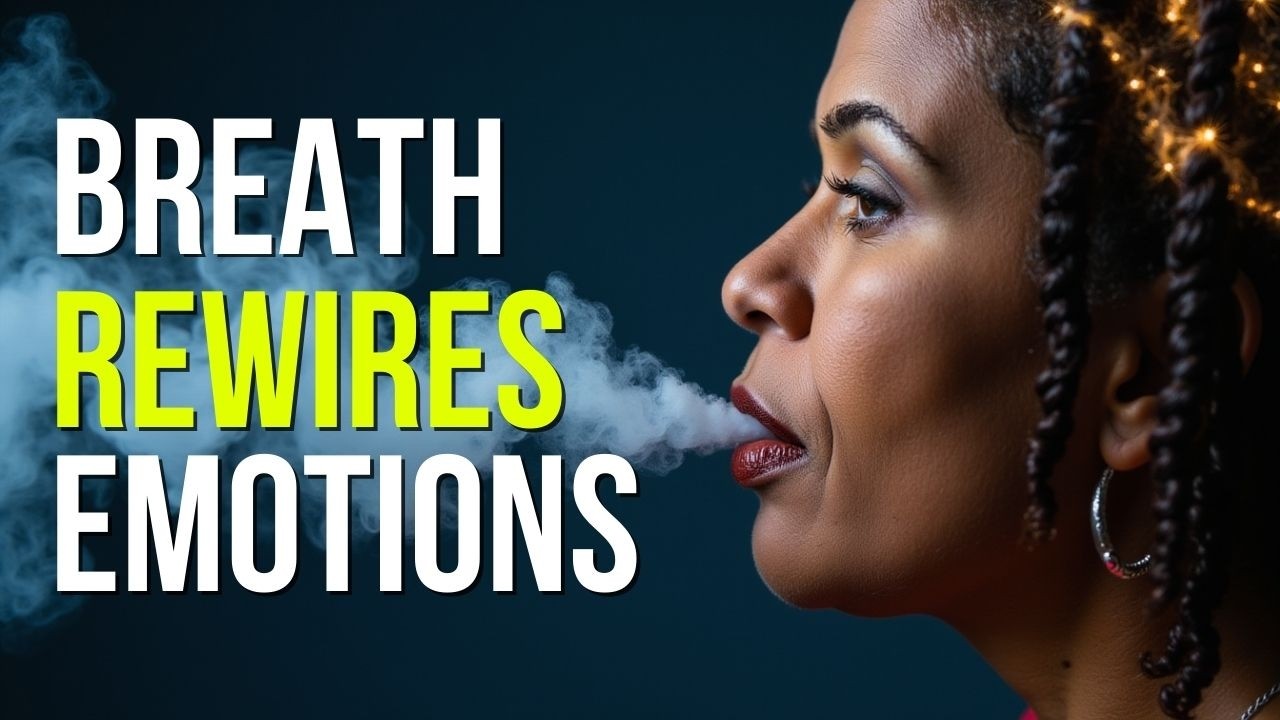
The Neuroscience of Breath: How to Use Breathing to Control Emotions 🌬️🧠
TL;DR 🏆
Time Saved: Approximately 10 minutes 📉⏳
Key Takeaway: Mastering your breath can significantly enhance emotional regulation, cognitive function, and stress resilience. Learn three powerful breathing techniques that can instantly improve focus, reduce anxiety, and boost mental clarity. 💡
Introduction: Why Breathing Is the Key to Mental Mastery 🤯
Have you ever noticed how your breathing shifts when you’re under stress? It becomes shallow, rapid, or even stops for a moment without you realizing it. What if I told you that controlling your breath is one of the most effective ways to regulate emotions, boost brain power, and enhance stress resilience?
In this post, you’ll discover:
✅ The science behind breath control and how it affects your nervous system.
✅ 3 evidence-based breathing techniques to reduce anxiety, improve focus, and reset stress.
✅ How to apply these techniques in real life, with step-by-step guidance.
Ready to transform your mind in minutes? Let’s dive in. 🚀
Understanding the Science of Breathing 🧠
Your Nervous System: The Gas Pedal & Brake System 🚦
Your autonomic nervous system has two key branches:
- Sympathetic System (Fight or Flight 🏃) – Activates stress response.
- Parasympathetic System (Rest & Digest 😌) – Promotes relaxation.
The connection? The vagus nerve acts as a superhighway between your brain and body. Slow, controlled breathing sends calming signals via this nerve, helping to:
✅ Reduce stress hormones like cortisol.
✅ Increase GABA neurotransmitters (which promote calmness).
✅ Improve heart rate variability (a key indicator of stress resilience).
Timestamp: Learn more about the nervous system at 1:01
How Breathing Influences Your Brain & Body
1️⃣ Emotional Regulation: Reducing Anxiety & Overreaction
🔬 Your breath directly affects carbon dioxide (CO2) levels in the blood. When CO2 drops too low due to rapid breathing, your amygdala (emotional alarm center) becomes more excitable, making you prone to panic and anxiety.
✅ Deep breathing stabilizes CO2 levels, calming the amygdala and reducing stress.
✅ This explains why breathing into a paper bag helps people having panic attacks—it restores CO2 balance.
Timestamp: How breath reduces anxiety at 2:08
2️⃣ Cognitive Function: Boosting Focus & Decision-Making 🎯🧠
🧬 Controlled breathing increases oxygen delivery to the prefrontal cortex (responsible for decision-making and focus).
✅ More oxygen = clearer thinking, better memory, and improved concentration.
✅ Shallow breathing reduces oxygen flow, impairing mental performance.
Timestamp: Why oxygen matters for thinking at 3:12
3️⃣ Stress Reset: Clearing Cortisol for Long-Term Well-Being 😌🔄
Stress triggers the release of cortisol (the stress hormone). Deep diaphragmatic breathing helps clear excess cortisol, literally resetting your body’s stress response.
✅ It also improves heart rate variability, making you more resilient to stress.
Timestamp: The impact of breath on stress at 3:46
Three Powerful Breathing Techniques (With Step-by-Step Guide)
1️⃣ Box Breathing (Navy SEALs’ Secret to Stay Calm) 🎖️
✅ Best for: Quick stress relief and mental clarity.
✅ How to do it:
- Inhale for 4 counts 🫁
- Hold for 4 counts ⏳
- Exhale for 4 counts 🌬️
- Hold for 4 counts ⏳
- Repeat for 2-5 minutes
Timestamp: Box breathing tutorial at 4:49
2️⃣ 4-7-8 Breathing (Best for Anxiety & Sleep) 🌙😴
✅ Best for: Rapid anxiety reduction & sleep improvement.
✅ How to do it:
- Inhale for 4 seconds 🌬️
- Hold for 7 seconds ⏳
- Exhale for 8 seconds 🌬️
- Repeat for 4 cycles
Timestamp: 4-7-8 breathing guide at 5:20
3️⃣ Resonance Breathing (Long-Term Stress Resilience) 🔄🧘
✅ Best for: Overall emotional stability & balance.
✅ How to do it:
- Inhale for 5 seconds 🌬️
- Exhale for 5 seconds 🌬️
- Repeat at 6 breaths per minute for 5 minutes
Timestamp: Resonance breathing explained at 5:52
When to Use These Techniques? 🕒
- Box Breathing: Before a meeting, during high-stress situations.
- 4-7-8 Breathing: When feeling anxious or struggling to fall asleep.
- Resonance Breathing: As a daily stress management practice.
Timestamp: Choosing the right technique at 6:25
Final Takeaways: How to Implement Breathwork in Daily Life ✅
Common Mistakes to Avoid 🚫
❌ Forcing the breath (should feel natural).
❌ Expecting instant results (it’s a skill, practice makes perfect).
❌ Only using it when stressed (practice regularly to make it effective).
Timestamp: Common mistakes to avoid at 7:25
🚀 Ready to Take Control? Start Practicing Today!
Breathwork is an instant, free, and accessible tool that rewires your brain for resilience, focus, and calmness. Try these techniques today and witness the transformation. 🌟
💬 Which technique will you try first? Comment below! 👇