
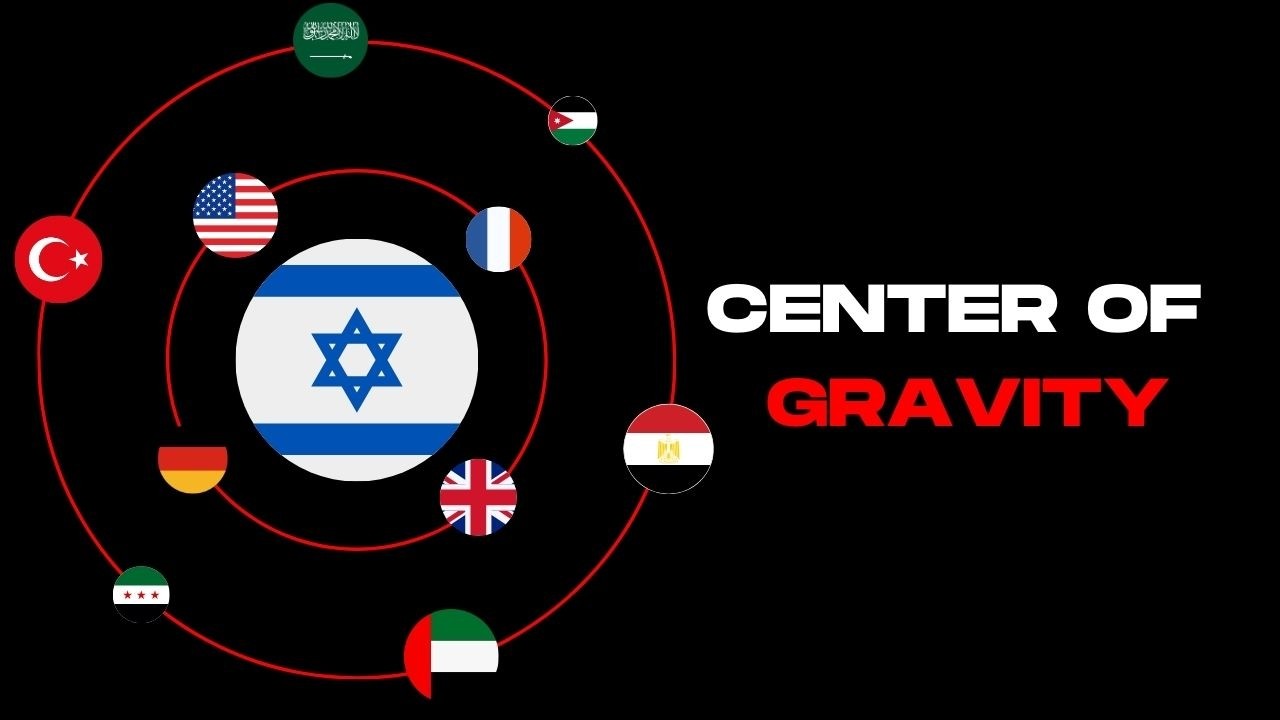
The Rise of Pax Judeaica: How Israel’s Influence Shapes the New Global Order
Understanding the New World Power Dynamic (00:00:00)
What Is Pax Judeaica and Why It Matters
- Definition: Pax Judeaica refers to a new form of empire where Israel exerts global influence not through traditional military occupation but via proxy power, intelligence, surveillance, and advanced technology.
- Significance: Unlike historical empires that relied on physical control, this model leverages political, economic, and technological dominance to steer existing powers, especially the United States.
- Implications: This shift challenges conventional ideas of empire and power, emphasizing control through influence and data rather than territory.
The Evolution from Greater Israel to a Global Proxy Empire
- Greater Israel Project: Historically focused on territorial expansion within the Middle East.
- Current Ambition: Transitioning to a global empire that operates invisibly through proxy networks and technological dominance.
- Why This Shift?
- Israel’s limited size and resources prevent traditional empire-building.
- Influence is now about steering powerful allies and global systems rather than direct control.
- Implication: Power is less about owning the “sword” and more about directing where it swings.
How Israel Leverages U.S. Power
- Institutional Leverage:
- Zionist networks embedded within U.S. political, financial, and intelligence institutions.
- Ability to shape U.S. foreign policy and military decisions without direct command.
- Historical Context:
- Early 1990s: U.S. could enforce conditions on Israel.
- Recent decades: Israel increasingly dictates terms, influencing U.S. actions even when contrary to American interests.
- Why It Matters:
- Demonstrates a unique form of influence where a smaller state guides a superpower’s decisions.
- Raises questions about sovereignty and the true drivers behind U.S. foreign policy.
The Role of Surveillance, AI, and Technology in Modern Control
- Surveillance as Power:
- Control shifts from brute force to visibility and prediction.
- Integration of banking, biometrics, social media, and travel data into unified profiles.
- Artificial Intelligence:
- Automates labor, concentrates wealth, and enforces behavioral compliance.
- Technologies like Worldcoin link economic survival to biometric data and obedience.
- Israeli Tech Influence:
- Israel as a hub for AI development and cybersecurity.
- Israeli intelligence veterans embedded in major U.S. tech firms.
- Companies like OpenAI, Palantir, and Palo Alto Networks have strong Israeli ties.
- Implications:
- Creates a system where participation in society depends on submission to surveillance.
- Raises ethical concerns about autonomy, privacy, and centralized control.
Religious and Eschatological Dimensions
- Religious Zionism:
- Some Israeli factions view their political power as divinely ordained.
- Messianic beliefs fuel ambitions for global dominance and territorial expansion.
- Political Theology:
- Religion becomes political infrastructure, justifying actions as fulfillment of prophecy.
- End Times Parallels:
- Concepts like the “mark of the beast” resonate with modern surveillance and control systems.
- Economic participation conditioned on compliance mirrors biblical prophecy.
- Why This Matters:
- Adds a layer of ideological motivation behind geopolitical strategies.
- Explains the persistence and intensity of certain policies and alliances.
Real-World Examples of Pax Judeaica in Action
- Middle East Influence:
- U.S. sanctions relief for Syria linked to pro-Israel lobbying.
- UAE’s weapons deals tied to normalization with Israel.
- Global Political Leverage:
- Support for political figures in Argentina and Venezuela contingent on alignment with Israel.
- Gatekeeping Power:
- Access to Washington and U.S. resources often requires Zionist approval.
- Implications:
- Demonstrates how Israel’s influence extends beyond the Middle East.
- Highlights the strategic importance of political alignment with Israel for global actors.
The Future of Power: Data, Dependency, and Control
- Economic Dependency:
- AI-driven automation threatens traditional employment.
- Universal Basic Income (UBI) programs tied to biometric surveillance create dependency.
- Surveillance Infrastructure:
- Private tech firms act as intermediaries between governments and populations.
- Centralized data profiles enable continuous monitoring and behavioral control.
- Power Dynamics:
- Whoever controls data and AI systems wields unprecedented authority.
- Israel’s strategic positioning in these sectors amplifies its global leverage.
- What This Means:
- Traditional military might is no longer the sole determinant of power.
- Control through technology and data is the emerging paradigm.
Key Takeaways
- Pax Judeaica represents a new empire model based on proxy influence, intelligence, and technological dominance rather than territorial conquest.
- Israel’s leverage over U.S. power is profound, shaping policies and military actions through embedded networks and institutional influence.
- Surveillance and AI are central tools in this new order, enabling preemptive control over populations and economic participation.
- Religious ideology intertwines with political ambition, providing a messianic framework that motivates and justifies Israel’s global strategy.
- Global actors seek alignment with Israel to gain access to U.S. resources and political favor, reinforcing Israel’s gatekeeping role.
- The future of power lies in data control and dependency, with Israel strategically positioned at the heart of digital surveillance and AI development.
This evolving landscape challenges traditional notions of empire and sovereignty, urging us to rethink how power operates in the 21st century. Understanding these dynamics is crucial for navigating the geopolitical and technological realities shaping our world today.