
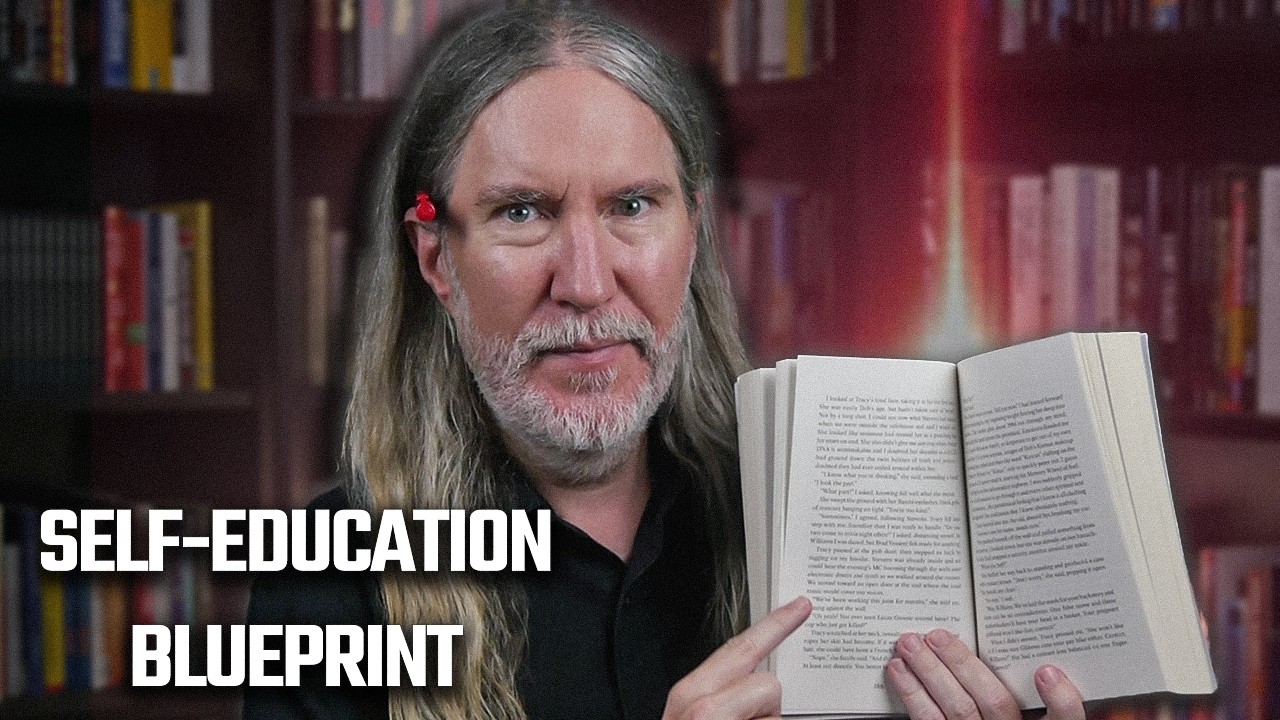
The Self-Taught Revolution: How to Become an Autodidact & Master Any Skill
11 Essential Principles for Self-Directed Learning
1️⃣ Learning as a Game: The Secret to Consistency
📌 Point: Treating learning like a game makes it enjoyable and sustainable.
📌 Principle: Gamify your learning to stay motivated and engaged over time.
📌 Inference: Learning shouldn’t feel like a chore—find ways to make it exciting, rewarding, and immersive.
2️⃣ The Rise of the Autodidact: Why Self-Education is the Future
📌 Point: The world is changing too fast for traditional education to keep up.
📌 Principle: Lifelong learning is no longer optional—it’s a survival skill.
📌 Inference: Those who take ownership of their learning will have a huge competitive edge in life and business.
3️⃣ Independence vs. Guidance: You Don’t Have to Learn Alone
📌 Point: Being self-taught doesn’t mean rejecting guidance—it means choosing the right mentors.
📌 Principle: Curate your learning by selecting expert sources rather than waiting for formal instruction.
📌 Inference: Seek out the best knowledge, but take responsibility for applying it on your own terms.
4️⃣ The Initiative Factor: Designing Your Own Curriculum
📌 Point: The best autodidacts don’t follow rigid paths—they create their own.
📌 Principle: Proactively shape your learning journey instead of relying on pre-packaged courses.
📌 Inference: Decide what you need to learn, plan the journey, and adapt as you go.
🔗 Designing Your Own Curriculum
5️⃣ Master the Art of Deep Research
📌 Point: Surface-level learning is a trap—you need to dig deep into reliable sources.
📌 Principle: Critical thinking is key—question your sources, cross-check information, and challenge assumptions.
📌 Inference: Avoid shallow knowledge—train yourself to investigate beyond page one of Google.
🔗 Deep Research & Critical Thinking
6️⃣ Learning How to Learn: The #1 Meta-Skill
📌 Point: Mastering memory techniques, focus strategies, and habit formation will accelerate all learning.
📌 Principle: The ability to learn efficiently is the most powerful skill of the 21st century.
📌 Inference: Optimize your brain’s capacity by improving memory, retention, and recall techniques.
7️⃣ Structured Learning Beats Random Learning
📌 Point: A clear roadmap will help you progress faster than jumping between topics.
📌 Principle: Structure beats randomness—follow a systematic approach to skill-building.
📌 Inference: Plan your learning with clear milestones, so you don’t get lost in endless information.
🔗 Structured Learning vs. Random Learning
8️⃣ The Dopamine Hack: Stay Motivated for the Long Haul
📌 Point: Most people quit because they rely on inspiration instead of structured motivation.
📌 Principle: Resetting your dopamine system helps you stay engaged and driven long-term.
📌 Inference: Build a habit-driven system where motivation is sustained naturally, not forced.
9️⃣ The Mind-Body Connection: Your Brain Needs a Strong Body
📌 Point: A healthy body fuels a powerful mind—fitness impacts focus, energy, and resilience.
📌 Principle: Physical health and mental clarity are deeply connected.
📌 Inference: Optimize your sleep, diet, and exercise to boost your cognitive abilities.
🔟 The Power of Purpose: Why Learning Needs a “So That”
📌 Point: Vague goals like “I want to learn a language” are weak—specificity fuels motivation.
📌 Principle: Attach every learning goal to a tangible outcome (e.g., “I want to learn Spanish so that I can speak with my partner’s family”).
📌 Inference: If your goal isn’t connected to a purpose, it’s easy to abandon it.
1️⃣1️⃣ Learn from Failures: The Shortcut to Mastery
📌 Point: Study what NOT to do—analyzing mistakes speeds up success.
📌 Principle: Failures teach more than successes—look for flaws in systems and strategies.
📌 Inference: Research failures as intensely as successes—it’ll save you years of wasted effort.
📌 Knowledge Gaps Filled
• Why Traditional Education Fails: Schools teach what to think, not how to think.
• How to Accelerate Learning: Focus on meta-learning techniques to process information faster.
• How to Stay Motivated: Dopamine control is key to long-term engagement.
• Why Fitness Matters: Cognitive function relies heavily on physical health.
• Why Most People Quit: Lack of clear structure & real purpose.
📌 Commands
• [L] Expand summary
• [A] Write an educational article
• [D] Create conclusion diagram
• [T] Assess my knowledge of the video through a multiple-choice quiz
• [I] Indicate timestamps
• [AI] Implement AI in your business
Which principle resonated most with you? 🚀