“When Silence Becomes Power: Machiavellian Strategy Meets Islamic Wisdom on Self-Control and Influence”
Exploring how silence is not passivity, but precision—backed by Qur’anic ethics and prophetic mastery of speech
1a. Silence Is Not Weakness—It’s Strategic Authority
📌 00:00
📝 The Point:
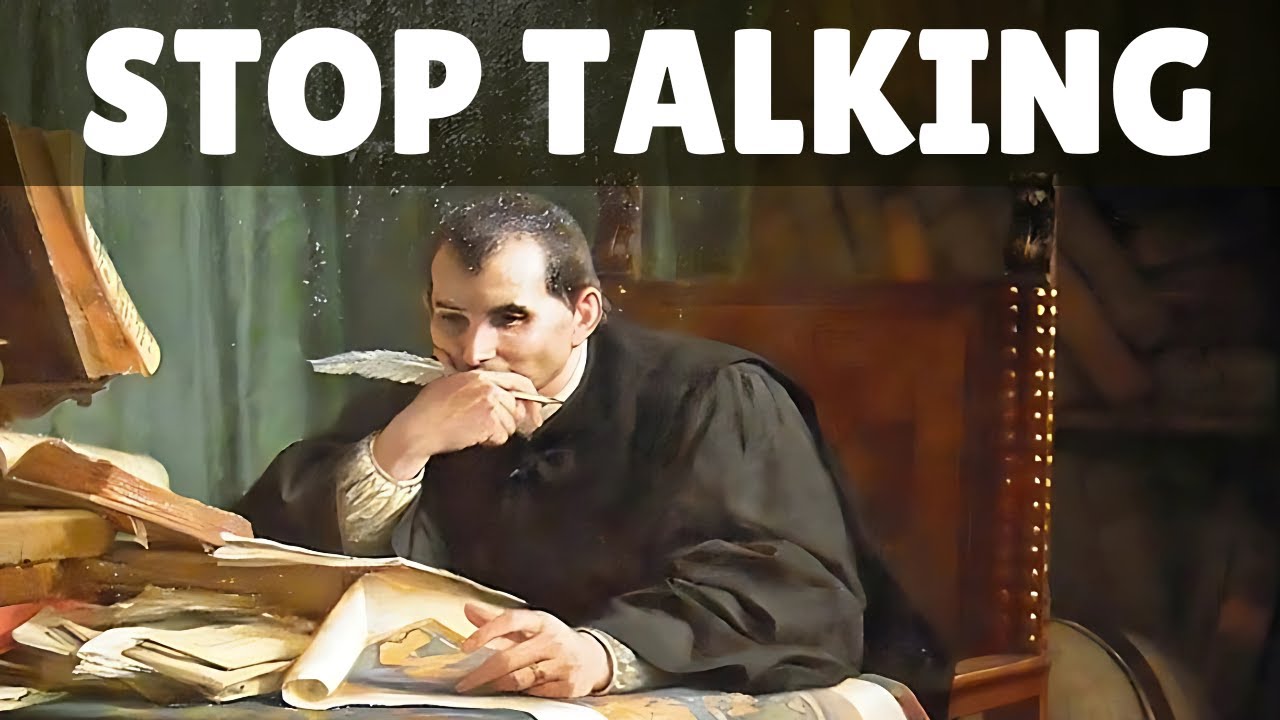
• Machiavelli (Italian political philosopher) saw silence as a deliberate tool of power—not retreat, but control.
• Speaking too early, too often, or without purpose invites defeat and hands advantage to others.
• Real leaders don’t rush to fill silence—they use it to observe, assess, and control perception.
⚖️ The Law:
• The Prophet Muhammad (peace be upon him) said: “Whoever believes in Allah and the Last Day should speak good or remain silent” (Bukhari).
• The Qur’an states: “And when the ignorant address them [the believers], they say [words of] peace” (Qur’an 25:63).
• Imam Malik warned: “The tongue is the interpreter of the heart. If the heart is sound, the speech will be measured.”
🔮 And So:
• Speaking little forces others to fill in gaps, often revealing more than they should.
• The silence of the righteous becomes intimidating to the unrighteous.
• Words carry weight only when they are rare and rooted in purpose.
“In a world addicted to noise, can restraint become the loudest form of strength?”
1b. Mystery Is Power: Conceal to Control
📌 00:36
📝 The Point:
• Machiavelli emphasized that people judge by appearances, not by substance.
• The silent strategist controls what others see and withholds what they don’t need to know.
• Mystery breeds curiosity, respect, and fear.
⚖️ The Law:
• Imam Al-Ghazali taught: “Speech is a veil of the unseen; guard it unless necessity demands.”
• The Qur’an warns: “Do not pursue that of which you have no knowledge” (Qur’an 17:36).
• Imam Shafi’i said: “If silence adorned a person, then silence would be the best garment.”
🔮 And So:
• Concealing your intentions creates strategic ambiguity.
• Others reveal themselves while you remain a question mark.
• Mystery elevates you beyond ordinary predictability.
“Why offer clarity to those who intend confusion?”
1c. Information Asymmetry: The One Who Knows More Wins
📌 02:00
📝 The Point:
• He who speaks last knows more than he reveals, while others reveal more than they know.
• Control over information flow is the core of negotiation, leadership, and survival.
• People surrender leverage when they speak from compulsion instead of calculation.
⚖️ The Law:
• The Prophet said: “Silence is wisdom, though few practice it” (Ibn Abi Dunya).
• Qur’an calls for measured speech: “Say to My servants… speak that which is best” (Qur’an 17:53).
• Imam Abu Hanifa was known to pause deeply before speaking—his speech was rare but razor-sharp.
🔮 And So:
• The one who controls the flow of information dictates the outcome.
• Most people seek validation through speaking; the wise seek clarity through listening.
• Let silence gather data before you decide to speak your truth.
“Is it more powerful to be heard—or to be the one who hears everything?”
1d. Words Are Commitments—Silence Keeps Options Open
📌 06:00
📝 The Point:
• Every spoken word commits you to a position, narrows your options, and exposes your plan.
• Machiavelli taught that hasty speech is self-sabotage.
• Real power lies in keeping all possibilities alive—until the moment of action.
⚖️ The Law:
• The Prophet was described as speaking “only when necessary,” never idle.
• Imam Ahmad bin Hanbal warned against speaking in haste: “Speak when your words weigh heavier than silence.”
• The Qur’an commands truth, not chatter (Qur’an 33:70).
🔮 And So:
• Haste leads to regret; restraint leads to refinement.
• Delay creates leverage; noise dissolves it.
• Speech must be filtered through wisdom, not emotion.
“How many regrets are born from words that silence could have swallowed?”
1e. In Silence, You Listen With Intent
📌 10:00
📝 The Point:
• You can’t speak and listen deeply at the same time.
• Silence is not passive; it’s active listening, absorbing, detecting patterns, sensing weakness.
• Speech distracts; silence focuses.
⚖️ The Law:
• The Prophet (peace be upon him) was a master listener—he gave full attention before replying.
• The Qur’an says: “And do not be among the heedless” (Qur’an 7:205).
• Imam Al-Shatibi linked silence to intelligence—“A silent person is not empty; he is full of discernment.”
🔮 And So:
• Strategic silence makes space for empathy, insight, and influence.
• Every word you don’t say becomes a telescope into the other’s world.
• You lead the room without saying a word.
“What could you uncover—if you stopped trying to prove you already know?”
Glossary
• Machiavelli: Italian Renaissance thinker, author of The Prince, known for political realism.
• Asymmetry: Unequal knowledge or power between two sides.
• Ghazali (Al-Ghazali): Muslim theologian who bridged spirituality with rational ethics.
• Shafi’i, Malik, Hanbal, Hanafi: Founders of four major Sunni schools of Islamic jurisprudence.
• Discernment: Deep insight; the ability to judge well.
• Strategic Silence: Intentionally withholding speech to observe, confuse, or dominate.