
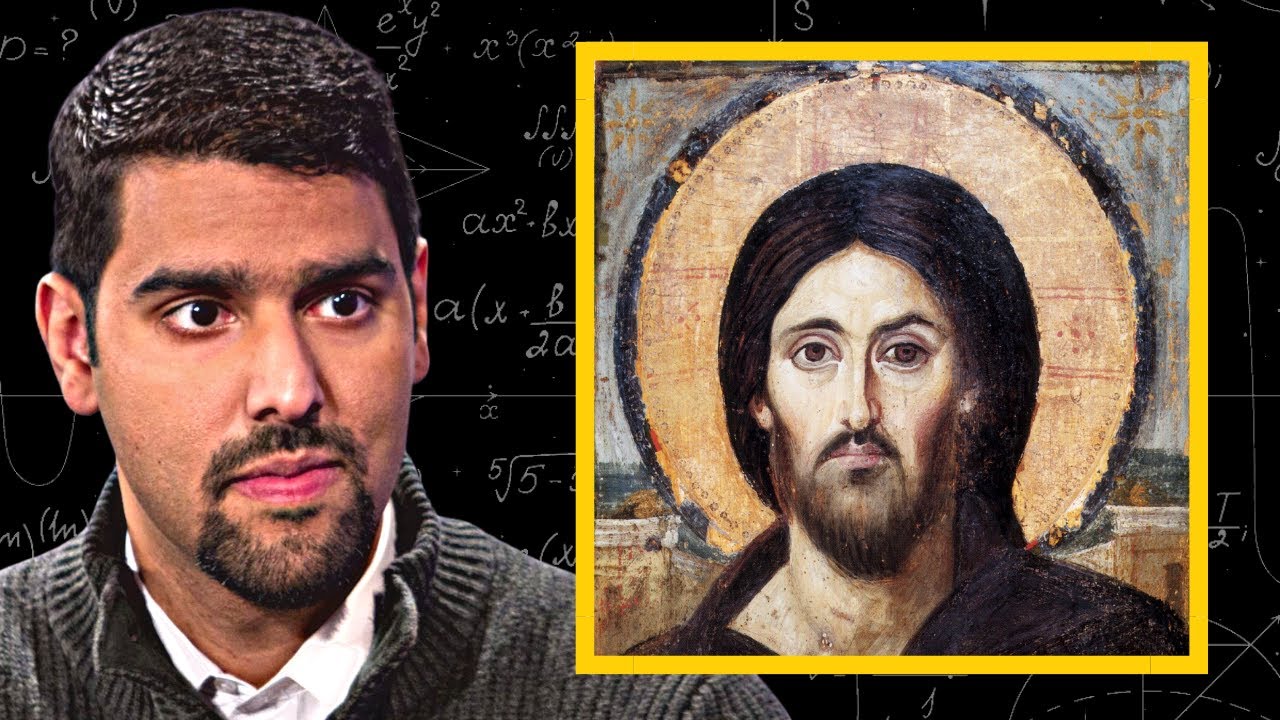
🏛️ “Was Jesus Crucified? A Critical Analysis from an Islamic Perspective”
TL;DR 🎯
Reading time saved: 20 minutes – This article critically analyzes the claims made in the video “Jesus Was NOT A Myth: 15 Minutes of Evidence” and contrasts them with the Islamic perspective. It highlights contradictions in secular historical accounts, challenges the Christian narrative of Jesus’ crucifixion, and concludes with why Islam presents the most consistent and logical understanding of Jesus (Isa, peace be upon him).
📖 1️⃣ The Existence of Jesus – An Agreed Historical Reality
Christian and Secular Views:
- The video asserts that Jesus’ existence is “incontrovertible” based on over 40 historical sources.
- Comparisons are made between Jesus and Emperor Tiberius, highlighting that Jesus has far more historical references than even the Roman ruler of his time.
- It dismisses Jesus mythicism as an extreme minority view.
Islamic Perspective:
- Islam affirms that Jesus existed but rejects the Christian narrative of his divinity and crucifixion.
- The Qur’an confirms Jesus was a historical figure and a prophet of Allah:
“And We gave Jesus, the son of Mary, clear proofs and supported him with the Holy Spirit.” (Qur’an 2:87)
- However, Islam denies that Jesus was crucified, stating that the story was distorted:
“And they did not kill him, nor did they crucify him; but another was made to resemble him to them.” (Qur’an 4:157)
💡 Key Insight: Islam agrees that Jesus existed but argues that his message and historical records have been altered.
✝️ 2️⃣ The Crucifixion – Fact or Fabrication?
Christian Argument:
- The video claims that virtually all scholars, including secular historians, agree that Jesus died on the cross.
- It cites Jewish and Roman records (e.g., Josephus, Tacitus) and even Muslim historians like Reza Aslan, who concede the crucifixion happened.
- It argues that no one survived Roman crucifixion, reinforcing the claim that Jesus was executed.
Islamic Response:
- The Qur’an clearly denies the crucifixion, stating it was an illusion created by Allah:
“But they killed him not, nor crucified him, but it was made to appear so to them…” (Qur’an 4:157)
- Classical scholars such as Ibn Kathir and Al-Razi confirm that another individual (possibly Judas Iscariot) was mistakenly crucified in Jesus’ place.
- Many Gnostic Christian sects (e.g., Basilideans in the 2nd century) also denied the crucifixion, suggesting the belief was not unanimous.
💡 Key Insight: Despite widespread belief in the crucifixion, historical inconsistencies and alternative narratives support the Qur’anic assertion that Jesus was not killed.
🌅 3️⃣ The Resurrection – A Fabricated Myth?
Christian Argument:
- The video asserts that Jesus rose from the dead, citing:
- The disciples’ belief in the resurrection.
- The conversion of Paul (Saul of Tarsus) from persecutor to believer.
- 500 witnesses claiming to have seen the risen Jesus.
Islamic Response:
- The resurrection contradicts both rational inquiry and scriptural consistency.
- The Qur’an emphasizes that Jesus was not killed and was instead raised to Allah alive:
“But Allah raised him up unto Himself, and Allah is Ever All-Powerful, All-Wise.” (Qur’an 4:158)
- There are no contemporary Roman records documenting Jesus’ resurrection.
- Paul’s conversion is a weak argument, as self-interest and visions cannot be verified historically.
💡 Key Insight: The resurrection narrative relies on subjective accounts and theological bias, whereas Islam provides a consistent alternative explanation.
🕵️♂️ 4️⃣ Historical Evidence – Is It Reliable?
Questionable Historical Records:
- The video cites sources such as Josephus, Tacitus, and the Talmud, arguing that even non-Christians acknowledged Jesus’ death and resurrection.
- However, these sources are highly disputed:
- Josephus’ writings were later edited by Christians, casting doubt on authenticity.
- Tacitus mentions Jesus in passing, offering no firsthand evidence.
- Talmudic references describe Jesus as a magician, contradicting Christian claims of divinity.
Islamic Perspective:
- Islam acknowledges that historical records exist but argues that they were written decades later, influenced by political and theological agendas.
- The Qur’an, revealed by Allah, remains unchanged and asserts the truth about Jesus.
- The Prophet Muhammad ﷺ said:
“By Him in Whose Hands is my life, the son of Mary will soon descend among you as a just ruler.” (Sahih al-Bukhari 3448)
- This confirms that Jesus was not crucified and will return in the End Times.
💡 Key Insight: Islamic scripture provides the most consistent explanation, whereas secular sources contain contradictions.
🎯 Final Verdict: Islam Provides the Most Consistent Account
- Jesus existed, as affirmed by both secular history and Islam.
- The crucifixion narrative is flawed and contradicted by Islamic teachings.
- The resurrection is theologically driven rather than historically proven.
- Secular sources are inconsistent, while the Qur’an provides the most logical explanation.
📌 Final Thought: Islam presents a consistent, rational, and divinely revealed truth about Jesus, free from historical distortions and contradictions.
“Indeed, in the creation of the heavens and the earth, and the alternation of the night and the day, are signs for those of understanding.” (Qur’an 3:190)
📌 What to Do Next?
✅ Share this post to help others understand Jesus from an Islamic perspective.
✅ Reflect on whether Christian claims about Jesus are historically reliable.
✅ Watch the full video 👉 Jesus Was NOT A Myth: 15 Minutes of Evidence