
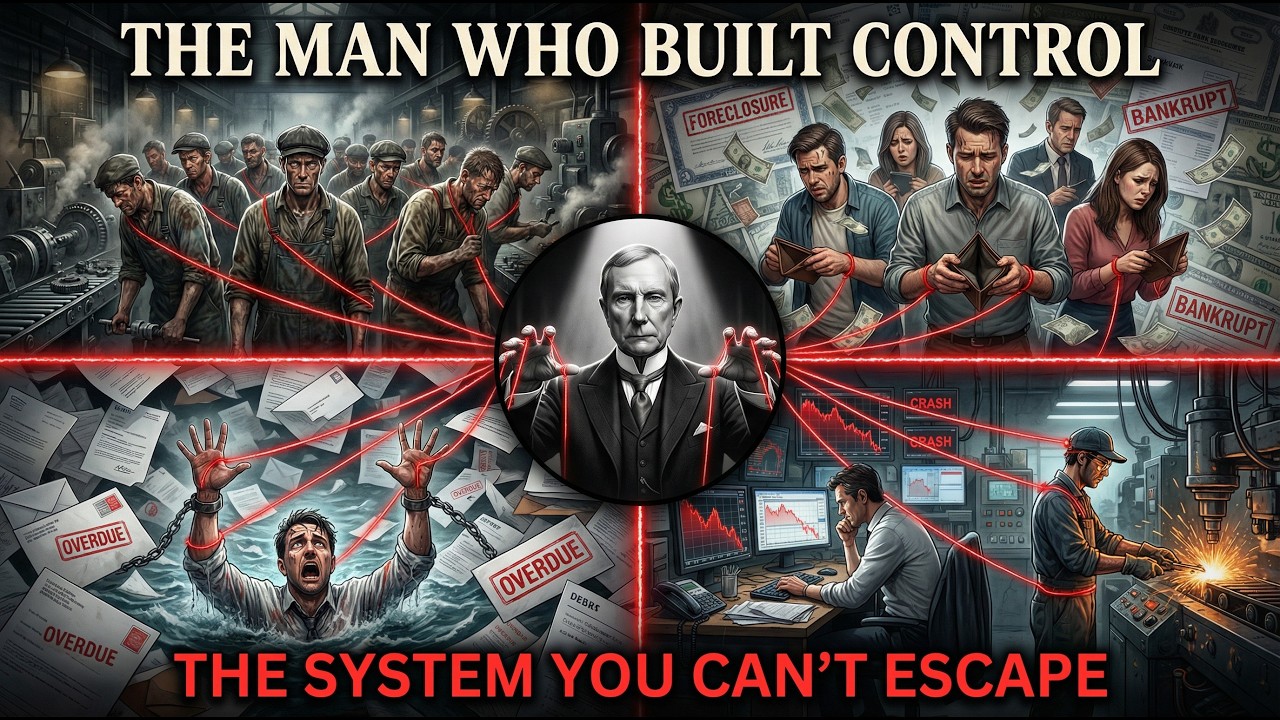
John D. Rockefeller: Architect of the Unstoppable Corporate System Controlling Modern Life
How Rockefeller Built the Foundation of Modern Monopolies (00:00:10)
- Controlled 4% of U.S. oil refining in 1870; expanded to 90% by 1880 and 91% of oil production by 1904.
- Created the blueprint for monopolies: vertical integration, horizontal consolidation, regulatory capture, and philanthropic influence.
- His system became the model for every dominant corporation today, including Amazon, Google, Pfizer, and JP Morgan.
The Rockefeller Playbook: Core Strategies Behind Corporate Dominance (00:05:20)
- Vertical Integration: Control every stage of production and distribution to reduce costs and eliminate reliance on competitors.
- Horizontal Consolidation: Acquire or destroy competitors to dominate market share.
- Regulatory Capture: Influence and shape regulations to favor the monopoly and create barriers for new entrants.
- Philanthropy as Influence: Use tax-exempt foundations to shape policy, education, and public perception, while avoiding taxes.
The Trust Structure: Legal Innovation That Cemented Monopoly Power (00:10:45)
- Standard Oil Trust (1882) allowed Rockefeller to control multiple companies across states despite legal restrictions.
- Trusts evolved into modern holding companies like Alphabet (Google), Berkshire Hathaway, and Meta.
- This structure complicates regulation and breakup efforts by fragmenting corporate entities legally but maintaining centralized control.
The Enduring Legacy of Rockefeller’s System in Today’s Economy (00:15:30)
- Descendants of Standard Oil include ExxonMobil, Chevron, and BP, controlling most oil refining and sales.
- Amazon replicates vertical integration and horizontal consolidation controlling retail, logistics, and cloud computing.
- Google’s holding company Alphabet mirrors the trust structure, owning multiple subsidiaries to optimize tax and regulatory advantages.
- Pharmaceutical companies use regulatory capture to extend patents and influence FDA regulations.
- Major banks use holding company models to evade comprehensive regulation.
Philanthropy as a Tool for Power and Legitimacy (00:20:50)
- The Rockefeller Foundation (est. 1913) funded medical education and research, shaping American healthcare toward pharmaceutical dominance.
- Modern billionaires like Bill Gates and Mark Zuckerberg use foundations to influence global health, education, and policy while minimizing taxes.
- Philanthropy serves as a strategic tool for legacy building and policy control, not just charity.
The System’s Impact on Consumers and Wealth Distribution (00:25:15)
- The system delivers efficiency: cheaper kerosene, fast shipping, instant information, and effective medicine.
- However, it concentrates wealth at the top, extracting billions from consumers annually.
- Average American spends thousands yearly on gasoline, retail, healthcare, and technology—all controlled by companies using Rockefeller’s system.
- Competition is effectively eliminated, leaving consumers with limited real choices.
Why the Rockefeller System Is Unavoidable and Self-Perpetuating (00:30:40)
- The system is embedded in corporate law, tax codes, and regulatory frameworks.
- Attempts to break monopolies often result in reconsolidation and even greater control.
- Consumers cannot realistically avoid these corporations due to their dominance in essential goods and services.
- Regulatory agencies are often influenced or controlled by the industries they regulate.
Strategic Responses to the Rockefeller System (00:35:00)
- Acceptance: Use the efficiencies and conveniences provided by these corporations while acknowledging wealth concentration.
- Resistance: Support antitrust enforcement, buy from small businesses, and use alternatives even if less convenient or more expensive.
- Positioning: Invest in dominant companies to benefit from the system’s wealth extraction rather than being solely a consumer.
Key Takeaways for Understanding and Navigating Modern Corporate Control (00:40:20)
- Rockefeller’s system is not a conspiracy but a legal, efficient, and replicable corporate structure.
- Vertical integration and horizontal consolidation remain the backbone of market dominance.
- Regulatory capture and philanthropy ensure the system’s longevity and public acceptance.
- The system’s design makes true competition and escape nearly impossible.
- Awareness and strategic positioning are essential for survival and potential benefit.
Summary of Rockefeller’s System and Its Modern Manifestations (00:45:00)
- Vertical Integration: Control supply chain end-to-end (Standard Oil → Amazon).
- Horizontal Consolidation: Buy or crush competitors (Standard Oil → Meta’s acquisitions).
- Trust/Holding Company Structure: Centralized control with legal separation (Standard Oil Trust → Alphabet).
- Regulatory Capture: Influence laws and regulations to maintain dominance (Standard Oil → Pharma and banking).
- Philanthropy: Shape public opinion and policy while avoiding taxes (Rockefeller Foundation → Gates Foundation).
Final Inference: The Rockefeller System Is the Blueprint of Modern Capitalism (00:50:10)
- The system balances efficiency and consumer benefits with extreme wealth concentration.
- It has evolved but remains fundamentally unchanged for over 150 years.
- Understanding this system is crucial for making informed economic, political, and investment decisions.
- The system’s persistence suggests it will continue shaping global markets and society for the foreseeable future.
Use these insights to create engaging, monetizable blog content that educates readers on the origins, mechanisms, and implications of modern corporate monopolies rooted in Rockefeller’s legacy.