
⛏️ “Buried Truth or Viral Illusion? Debunking the Giza Megastructure Claims”
How a viral video shook the internet with claims of 2km-deep structures under the pyramids—until science spoke up.
1A. The Viral Claim Shakes the Internet
📌 00:00
📝 The Point:
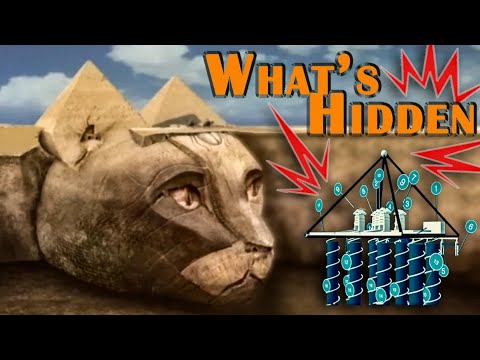
• An Italian team claimed to discover “megastructures” beneath the Giza Plateau using SAR (synthetic aperture radar) tech.
• They assert the presence of 8 Empire State Building–sized pillars, 2 km underground.
• The announcement spread fast online, but lacked academic scrutiny.
⚖️ The Law:
• Extraordinary claims require extraordinary evidence.
• Data presentation is not equivalent to data verification.
• Science demands replication and peer review.
🔮 And So:
• Sensational announcements without evidence erode public trust.
• Pseudoarchaeology spreads faster than fact-based science.
• Claims must be verified before becoming historical revision.
Is it discovery if no credible expert believes it can be confirmed?
1B. What Is SAR and Can It Actually Do This?
📌 00:18:34
📝 The Point:
• SAR has been used since the 1980s but is limited in depth—rarely penetrating beyond 2–3 meters in desert soil.
• The claim of detecting features 2 km deep is scientifically implausible.
• Latest AI-enhanced SAR techniques still max out at shallow depths.
⚖️ The Law:
• Method capability must match claim scale.
• Ground-truthing is required to validate remote sensing data.
• Depth ≠ clarity; deeper doesn’t mean better if tech can’t reach.
🔮 And So:
• The team’s method doesn’t support their claim.
• No evidence exists that SAR can read 2 km below Giza’s rock.
• Misusing tech misleads more than it informs.
If your tool can’t reach the truth, how can your results be trusted?
1C. Ignoring What We Already Know
📌 00:16:39
📝 The Point:
• We already have detailed studies of Giza’s geology and archaeology.
• The pyramids sit on solid bedrock—limestone carved millions of years ago.
• Known voids and chambers are shallow and well documented.
⚖️ The Law:
• New data must align with existing, verified records.
• Overturning known science requires more than anecdotes.
• Absence of known features in new data signals flaw.
🔮 And So:
• Known caves don’t appear in this team’s scans.
• The “discovery” doesn’t even reflect what’s been physically verified.
• Scientific contradiction without explanation implies error, not discovery.
If you ignore what we know to invent what we don’t, is it still research?
1D. The Water Problem
📌 00:21:00
📝 The Point:
• The water table in Giza is relatively high—not 2 km deep.
• Claimed structures would sit underwater or in solid rock.
• Hydrology doesn’t support deep voids.
⚖️ The Law:
• Geology constrains what’s structurally possible.
• Water tables shape what’s physically sustainable.
• Underground structures must obey environmental conditions.
🔮 And So:
• Building that deep would defy natural constraints.
• Claims ignore environmental impossibilities.
• Science says “no,” and so must reason.
Can a theory that floods itself still hold water?
1E. Ground-Truthing: The Missing Link
📌 00:09:11
📝 The Point:
• Real archaeological methods validate remote data with ground evidence.
• SAR scans require field checks to confirm accuracy.
• This team provided none.
⚖️ The Law:
• Signals must match physical evidence.
• Data without validation = speculation.
• Absence of ground truth undermines all conclusions.
🔮 And So:
• This team’s approach skipped core scientific steps.
• Without boots on the ground, claims remain fantasies.
• Peer-reviewed science demands more than graphics.
If you never dig, how do you know you’ve found anything?
1F. Who’s Behind the Claim?
📌 00:24:12
📝 The Point:
• The lead researchers aren’t archaeologists—one’s a chemist, one runs a radar firm.
• Promoted by conspiracy circles, Infowars, and alt-history YouTubers.
• No academic publications support the claim.
⚖️ The Law:
• Expertise matters in interpretation.
• Scientific discourse is not the same as influencer buzz.
• Peer credibility trumps online virality.
🔮 And So:
• The platform isn’t science—it’s marketing.
• Audiences are drawn to spectacle, not substance.
• The messenger shapes the message.
If credibility is missing from the source, can the claim stand at all?
1G. Signal or Rorschach Test?
📌 00:30:01
📝 The Point:
• Actual scan data is vague, abstract—blobs of color.
• Interpretation is artistic, not analytical.
• No consistent pattern or shape to suggest structures.
⚖️ The Law:
• Data must be read with precision, not imagination.
• Pattern-seeking is human—but science requires discipline.
• Rorschach visuals reflect bias more than reality.
🔮 And So:
• People see what they want to see.
• The scan reveals more about belief than the earth.
• Wishful thinking becomes visual storytelling.
Is this discovery—or just modern mythology with better graphics?
1H. Conspiracy Framing Replaces Evidence
📌 00:43:21
📝 The Point:
• Researchers claim suppression by “mainstream Egyptology.”
• Yet, they access top-tier satellite data and go viral freely.
• The “cover-up” narrative drives attention, not truth.
⚖️ The Law:
• Suppression claims need evidence, too.
• Conspiracies don’t excuse poor science.
• Free speech includes the right to criticize false claims.
🔮 And So:
• The claim of cancellation is marketing.
• Critique is framed as censorship to gain sympathy.
• When substance fails, spectacle sells.
Are you uncovering history—or just dressing myth in scientific costume?
Ask for “e1” to “e8” to expand any point.


