
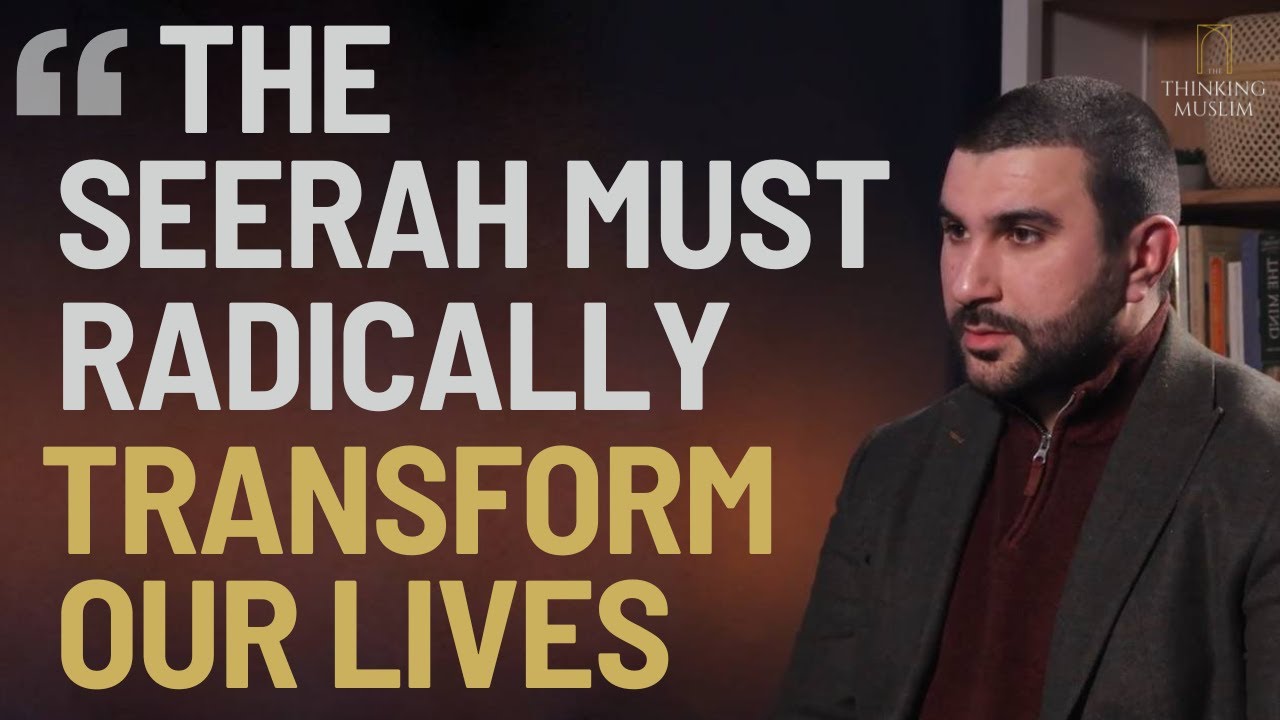
🔹 The Seerah: A Blueprint for Radical Transformation
1️⃣ The Seerah: A Heavy Book That Must Change You 📖
🔹 Principle: The Seerah (biography of Prophet Muhammad ﷺ) is not just a historical account; it is a living guide meant to shake and transform our worldview.
💡 Inference: If reading the Seerah doesn’t radically impact our perspectives, priorities, and actions, we are merely skimming its surface.
2️⃣ The Prophet ﷺ as a Political Role Model 🏛️
🔹 Principle: The Prophet ﷺ is not just an example in personal piety but also in politics, leadership, and social activism.
💡 Inference: His life is a complete framework for governance, justice, and public engagement—elements often ignored in modern Muslim discourse.
3️⃣ The Two Phases of the Seerah: A Strategic Blueprint ⚖️
🔹 Principle: The Prophet’s life is divided into two key phases—13 years in Mecca (persecution, grassroots activism) and 10 years in Medina (state-building).
💡 Inference: The Meccan period, often overlooked, teaches us resilience, conviction, and how to operate under oppression without power.
4️⃣ Rethinking Small Victories: The Power of Influence 🌍
🔹 Principle: Even small ideological shifts, like Umar Ibn Al-Khattab’s conversion, had massive consequences.
💡 Inference: What may seem like an insignificant event can shape history—every conversation, protest, and act of truth-telling has ripple effects.
5️⃣ The True Cost of Faith: Would You Stand Like the Sahaba? 🛡️
🔹 Principle: The early Muslims didn’t see immediate material gains from Islam; many faced persecution and death.
💡 Inference: Would we still hold firm to our beliefs if we were in their shoes? Islam is not about convenience—it’s about unwavering commitment.
6️⃣ The Quran Was Revealed in Stages: Why? ⏳
🔹 Principle: The Quran wasn’t revealed all at once; it came down situationally, helping the Prophet ﷺ respond to unfolding events.
💡 Inference: Divine guidance is meant to be understood in real-life contexts—just as the Prophet ﷺ used revelation to navigate challenges, so must we.
7️⃣ Applying the Seerah Today: Why Don’t We Take It Seriously? 🤯
🔹 Principle: Many Muslims read the Seerah as a historical fairy tale rather than as a model for their own lives.
💡 Inference: If we truly internalized it, we would act upon it—challenging oppression, engaging in activism, and reshaping our communities.
8️⃣ The Prophet’s Protest in Mecca: A Model for Resistance ✊
🔹 Principle: The Prophet ﷺ and the Sahaba openly declared their faith in a hostile environment, knowing they’d be attacked.
💡 Inference: Many today say protests and activism are useless, but the Prophet ﷺ protested in Mecca knowing Quraysh wouldn’t change overnight—yet it still mattered.
9️⃣ Social Media & Influence: The Hamza Parallel 🔥
🔹 Principle: Hamza Ibn Abdul Muttalib’s conversion was unexpected, yet it changed the power dynamics in Mecca.
💡 Inference: If a public figure like Candace Owens can shift her stance on Palestine, why do we doubt that anyone else can change? Words, truth, and persistence matter.
🔟 The Prophet’s Leadership of the Youth 👥
🔹 Principle: The Prophet ﷺ entrusted young companions like Mus’ab Ibn Umair (17) and Ali Ibn Abi Talib (8) with major responsibilities.
💡 Inference: Today’s youth are capable of great things—but only if they are given leadership, responsibility, and belief in their potential.
1️⃣1️⃣ The Final Question: Is Allah Enough for You? 💡
🔹 Principle: The Prophet ﷺ and the Sahaba moved forward not because they saw material success, but because Allah’s promise was enough.
💡 Inference: Our reluctance to act often stems from doubt. But faith means standing firm even when we can’t see the full picture.
🛠️ Commands
• 🔍 [L] Expand summary
• 📖 [A] Write an educational article
• 📊 [D] Create conclusion diagram
• 🎯 [T] Assess my knowledge of the video through a multiple-choice quiz
• ⏳ [I] Indicate timestamps