🚀 The Ultimate Guide to Hair Growth: Minoxidil & Game-Changing Hacks
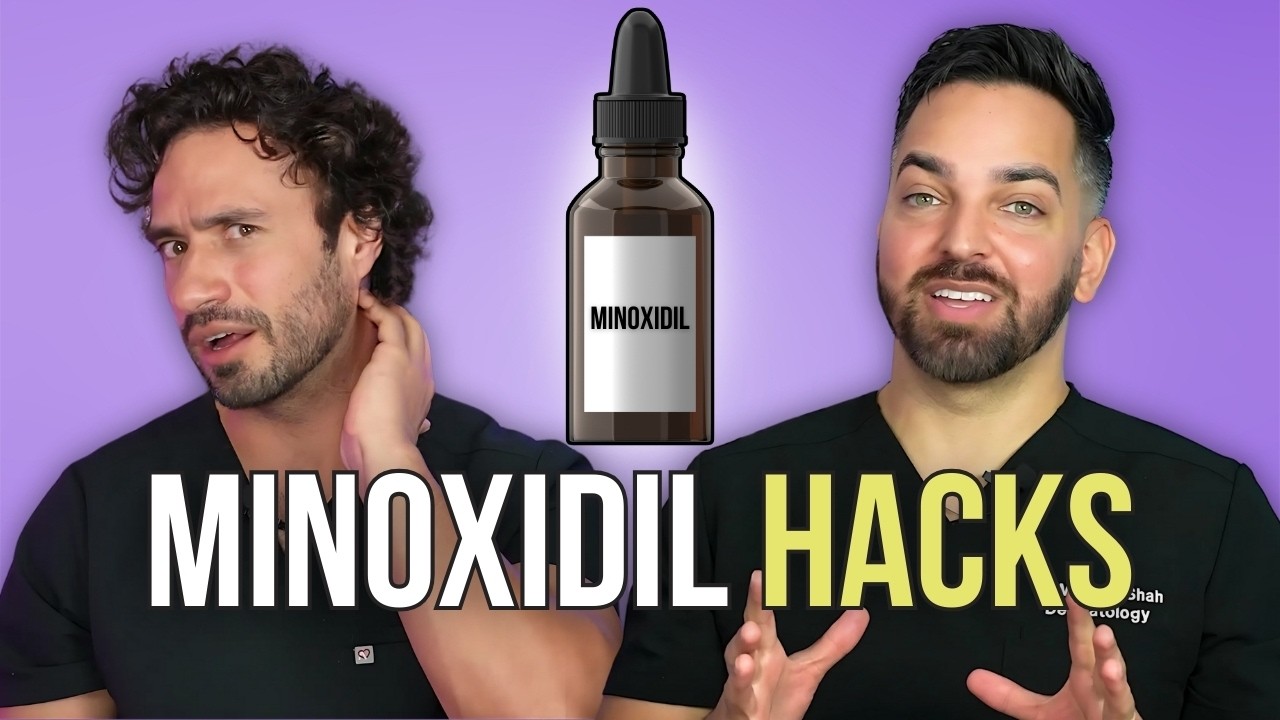
1A. Minoxidil – The Unexpected Discovery that Changed Hair Growth Forever
📝 The Point:
• Originally designed to treat high blood pressure, minoxidil’s unexpected side effect was hair growth, leading to its transformation into the most widely used hair loss treatment today.
• It remains the only over-the-counter FDA-approved treatment for androgenetic alopecia in men and women.
• The debate about its effectiveness continues, but consistent, long-term use has proven to slow down hair loss and stimulate regrowth.
⚖️ The Law:
• Innovation Comes from Accidents – Many of the most groundbreaking medical discoveries stem from unintended consequences.
• Consistency is Key – Minoxidil requires continuous use to maintain results; stopping use returns hair to its natural loss trajectory.
• Personalization Matters – Different people respond differently to treatment, necessitating combination therapies for optimal results.
🔮 And So:
• What if the most effective solutions to our biggest problems are hidden in unrelated breakthroughs?
• Is reliance on pharmaceuticals the best long-term solution for conditions that arise from genetic predisposition?
• If minoxidil was an accidental discovery, what other everyday medications could have secret superpowers?
1B. The Power of 5% Minoxidil: Why Strength and Formulation Matter
📝 The Point:
• The 5% formulation is proven more effective than 2% for all genders and should be the default choice for those seeking hair regrowth.
• Foam is preferred over liquid due to fewer allergens and irritants like propylene glycol.
• Many are unaware that the choice of formulation affects both results and side effects.
⚖️ The Law:
• Higher Potency, Greater Impact – Clinical studies consistently show stronger formulations yield better results.
• Minimizing Side Effects Maximizes Compliance – Irritation leads to discontinuation, negating potential benefits.
• Perception vs. Reality – Many assume all versions of minoxidil work the same, but formulation plays a crucial role.
🔮 And So:
• Are we unknowingly using ineffective or suboptimal treatments simply due to lack of awareness?
• Could the difference between success and failure in health treatments be as simple as choosing the right product version?
• How many people fail at hair restoration because they weren’t properly informed about the best formulation?
1C. Microneedling: Unlocking Minoxidil’s Full Potential
📝 The Point:
• The biggest barrier to minoxidil’s effectiveness is the skin itself—microneedling creates micro-channels for deeper absorption.
• A 1.5mm needle length has been clinically proven to enhance penetration and results.
• Proper sterilization and weekly use ensure effectiveness without infection risks.
⚖️ The Law:
• Barrier Breakdown Enhances Efficacy – Topical treatments are only as effective as their ability to penetrate the skin.
• Precision in Self-Treatment is Crucial – Incorrect use can lead to damage and infection.
• Combining Techniques Multiplies Results – Synergistic approaches accelerate success more than standalone treatments.
🔮 And So:
• Could this principle of barrier breakdown apply to other medical treatments where absorption is a limiting factor?
• How many people give up on minoxidil without realizing they’re not using it effectively?
• If penetration is key, what other treatments could be radically improved by making them more bioavailable?
1D. The Trifecta: Minoxidil, Retinoids & Tranexamic Acid for Hair Growth
📝 The Point:
• Retinoids enhance absorption, ensuring minoxidil penetrates deeper into the scalp.
• Tranexamic acid activates the key enzyme sulfotransferase, turning minoxidil non-responders into responders.
• Aspirin, often unknowingly used, can suppress sulfotransferase and reduce minoxidil’s effectiveness.
⚖️ The Law:
• Every Action Has a Reaction – Adding one treatment can amplify results or negate them unknowingly.
• Optimization Requires Understanding – Most people are unaware of interactions that can make or break their regimen.
• Strategic Stacking Works – Science-backed combinations provide exponential benefits rather than marginal gains.
🔮 And So:
• How many treatments are failing simply because they aren’t optimized properly?
• Could the key to improving medical outcomes be as simple as pairing treatments more effectively?
• Are we unknowingly sabotaging our own results with substances we assume are harmless?
1E. Oral vs. Topical Minoxidil: Which is Best?
📝 The Point:
• Low-dose oral minoxidil is often more effective than topical, despite being less well-known.
• Potential side effects include swelling, dizziness, and blood pressure fluctuations.
• The best approach might be using both oral and topical for maximum effect.
⚖️ The Law:
• Convenience vs. Control – Oral minoxidil eliminates application hassle but comes with systemic effects.
• Greater Power, Greater Risks – Internal treatments provide stronger results but require medical supervision.
• Layered Approaches Win – Combining multiple solutions often leads to the best long-term success.
🔮 And So:
• Should more people be considering oral minoxidil instead of assuming topical is their only option?
• Why do so few dermatologists discuss oral minoxidil despite its superior results?
• If we knew the absolute best way to treat hair loss, why wouldn’t everyone use it?
1F. Combination Therapy: Supercharging Minoxidil’s Impact
📝 The Point:
• Finasteride, dutasteride, and low-level light therapy can exponentially boost minoxidil’s effectiveness.
• Androgen-blocking medications prevent hair follicles from miniaturizing over time.
• Hair loss is like tending a garden—water alone isn’t enough; you need sunlight and fertilizer too.
⚖️ The Law:
• Targeting Multiple Pathways Works Best – Addressing just one cause of hair loss limits results.
• Preventing Hair Loss is Easier than Restoring It – Combination therapy maintains hair before it’s lost.
• Treat the Root, Not Just the Symptoms – Understanding hormonal involvement leads to better solutions.
🔮 And So:
• Why do most people wait until significant hair loss before considering combination treatments?
• Could we eliminate hair transplants if more people acted sooner with proactive treatments?
• What if treating hair loss was about understanding biology rather than trial and error?
1G. The Final Rule: Time is Hair – Act Fast or Lose More
📝 The Point:
• The earlier you intervene, the better your chances of saving and regrowing hair.
• Hair loss is progressive—once follicles miniaturize beyond repair, they’re gone permanently.
• Many people regret not starting treatments sooner.
⚖️ The Law:
• Procrastination is the Enemy – The longer you wait, the harder it is to recover lost hair.
• Treatment is Not a One-Time Fix – Consistency is key to keeping results.
• Future Regret is Avoidable – Those who act early experience the best long-term benefits.
🔮 And So:
• How many people will look back in 10 years and wish they had started treatment today?
• Could society reframe hair loss as something preventable rather than inevitable?
• If time is hair, how much time do we really have before it’s too late?