
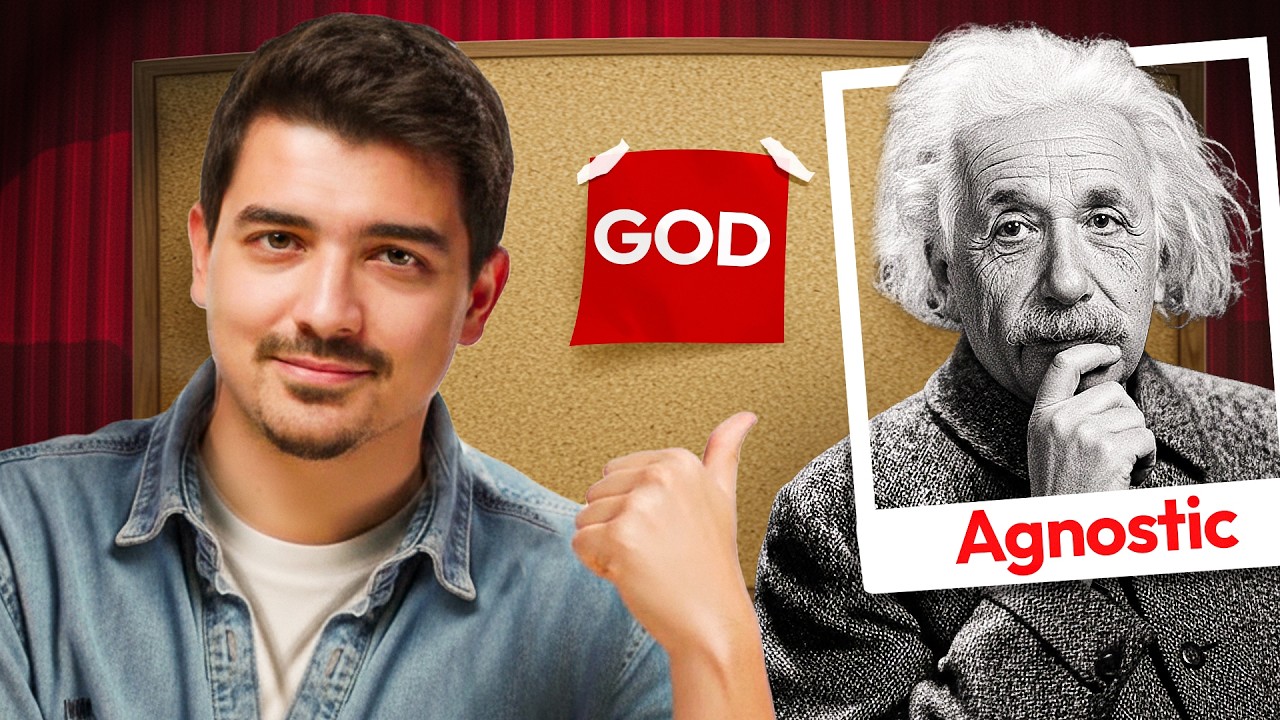
Why the Existence of a Creator Is a Logical Necessity: Understanding Agnosticism and Faith
Explore the Core Argument on the Existence of God 00:00:00
The Law of Excluded Middle: Why Agnosticism Falls Short
- Fundamental Logic Principle: Something either exists or it does not—there is no middle ground.
- Implication: Claiming uncertainty about God’s existence is logically inconsistent because existence is binary.
- Why It Matters: This principle challenges agnostic positions that claim “we cannot know” by showing that indecision often leans toward denial.
- Conclusion: Accepting or rejecting the existence of a creator is not a matter of belief alone but of logical necessity.
Natural Human Inclination Toward Belief in a Creator
- Scientific Findings: Research by Professor Justin L. Barrett and colleagues shows children naturally believe in a supernatural creator by age three.
- Inborn Nature (Fitra): This belief is not learned but innate, embedded in human nature.
- Why This Is Important: It suggests that belief in a creator is a universal, intuitive truth rather than a cultural artifact.
- Implication: The natural tendency to believe supports the argument that the existence of a creator is a fundamental human understanding.
Four Logical Possibilities for the Universe’s Existence
- Atoms Created the Universe and Continue Creating It
- Atoms appeared after the universe existed.
- Atoms lack consciousness, life, and will.
- Conclusion: Atoms cannot be the cause of the universe.
- Everything Came Into Existence by Itself
- Something cannot create itself without pre-existing.
- Matter is not eternal; it changes and is finite.
- Conclusion: Self-creation is impossible.
- Laws of Nature Created and Sustain the Universe
- Laws are descriptions, not entities with power.
- Rules require enforcement by a conscious agent.
- Conclusion: Laws alone cannot create or sustain existence.
- A Creator Brought Everything Into Existence and Continues to Create
- An eternal, all-powerful, all-knowing being is necessary.
- This being is the logical source behind the universe’s existence.
- Conclusion: The existence of a creator is the only rational explanation.
Debunking Agnostic Claims
Claim 1: The Human Mind Cannot Know God
- Clarification: Knowing God’s existence is different from fully understanding His infinite nature.
- Analogy: We accept electricity exists without fully understanding it.
- Implication: Limited human understanding does not negate the certainty of God’s existence.
Claim 2: Only Scientific Observation Provides Certainty
- Counterpoint: Many accepted truths (gravity, emotions, morality) are not directly observable.
- Types of Knowledge:
- Self-evident: Internal truths known without external proof.
- Deductive: Logical conclusions drawn from evidence.
- Why It Matters: Restricting knowledge to physical observation ignores intuitive and logical knowledge.
Claim 3: Uncertainty Means No Need to Worry About Religion
- Reality Check: Death is inevitable and demands serious consideration.
- Analogy: Ignoring clear danger (smoke, rain) by saying “maybe” is irrational.
- Implication: It is wiser to seek truth and prepare for the afterlife than to remain indifferent.
The Palace Door Analogy: Choosing Safety in Uncertainty
- Scenario: A palace with many doors offers refuge from danger.
- Lesson: Even if only one door is open, entering it is the rational choice.
- Application: Islam offers many “open doors” to truth and salvation.
- Why This Matters: It encourages proactive faith rather than passive doubt.
Additional Evidence Supporting the Creator’s Existence
- Fine-Tuning of the Universe: Precise conditions necessary for life point to intentional design.
- Quranic Miracles: Scientific, literary, historical, and social miracles affirm divine origin.
- Human Soul and Consciousness: Cannot be explained by atoms or natural laws alone.
- Moral and Logical Intuitions: Reflect attributes of a higher, conscious being.
Key Takeaways
- Existence is Binary: Something either exists or it does not; agnosticism’s middle ground is logically untenable.
- Innate Belief: Humans naturally tend to believe in a creator, supporting the idea that this belief is fundamental.
- Logical Elimination: Atoms, chance, and laws of nature cannot explain the universe’s existence; only a creator can.
- Knowledge Beyond Science: Intuition, logic, and self-evident truths provide valid knowledge beyond physical observation.
- Practical Wisdom: Facing the reality of death and the afterlife demands a conscious choice toward faith.
- Invitation to Action: Like entering a safe palace through an open door, embracing faith is the rational and life-affirming step.
This comprehensive understanding not only strengthens faith but also equips seekers with logical and intuitive tools to navigate doubts, making belief in a creator both a rational and heartfelt conclusion.