
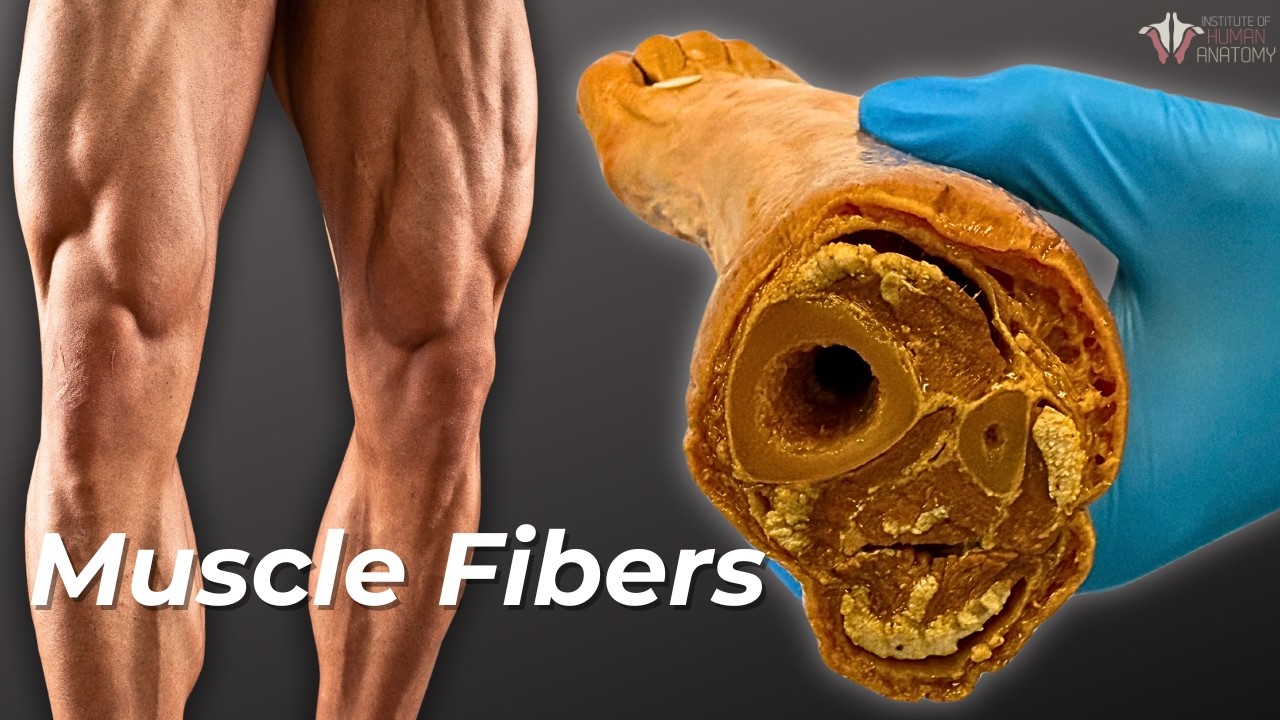
🏋️ How Your Muscle Fibers Change With Exercise 💪
1. ⚡ The Science of Muscle Performance
Point: Different people excel in different physical activities due to their muscle fiber composition.
Principle: Skeletal muscle fibers are genetically pre-disposed to endurance or explosive power.
Inference: Your muscle type affects your performance in sports and exercise.
2. 🏃 Understanding Muscle Fiber Types
Point: Muscles are composed of fast-twitch and slow-twitch fibers.
Principle: The proportion of these fiber types determines endurance or strength capabilities.
Inference: Some muscles have a mix of fiber types, influencing overall muscle performance.
3. 🧬 Genetic Influence on Muscle Composition
Point: Genetics play a significant role in determining fiber composition.
Principle: Some individuals naturally have more fast-twitch or slow-twitch fibers.
Inference: Your genetic predisposition may make you better at certain physical activities.
4. 🔄 How Training Alters Your Muscle Fibers
Point: Exercise can shift muscle fiber characteristics over time.
Principle: Slow-twitch fibers adapt to endurance training, while fast-twitch fibers respond to strength training.
Inference: You can train to develop muscle fibers that suit your athletic goals.
5. 🏗️ The Role of Postural Muscles
Point: Certain muscle groups contain more slow-twitch fibers due to their function.
Principle: Postural muscles in the neck, back, and legs need endurance to maintain stability.
Inference: Strengthening postural muscles is key for long-term musculoskeletal health.
6. 🏅 Slow-Twitch Fibers: Built for Endurance
Point: Slow-twitch (Type 1) fibers are optimized for oxygen consumption and fatigue resistance.
Principle: These fibers rely on aerobic metabolism to sustain activity.
Inference: Endurance athletes benefit from training that enhances slow-twitch fiber efficiency.
7. 🚀 Fast-Twitch Fibers: Power and Speed
Point: Fast glycolytic (Type 2X) fibers generate force rapidly but fatigue quickly.
Principle: These fibers rely on anaerobic glycolysis for energy.
Inference: Strength training and explosive movements develop these fibers.
8. 🌀 Hybrid Muscle Fibers: The Best of Both Worlds
Point: Fast oxidative (Type 2A) fibers combine endurance and power capabilities.
Principle: These fibers use both aerobic and anaerobic metabolism.
Inference: Moderate-intensity exercise improves both strength and endurance.
9. 🎯 How Your Body Selects Muscle Fibers
Point: Muscle fibers are recruited based on the intensity of an activity.
Principle: Low-intensity exercises activate slow-twitch fibers first, followed by fast-twitch fibers when higher force is needed.
Inference: Your body prioritizes energy efficiency when recruiting fibers for movement.
10. 🔧 Adaptations Through Training
Point: Training consistency can shift fiber type characteristics.
Principle: Slow-twitch fibers can improve strength, and fast-twitch fibers can gain endurance.
Inference: Long-term training influences how muscles develop and function.
11. 🎭 The Role of Genetics vs. Training
Point: While genetics set a foundation, training can reshape muscle fiber composition.
Principle: Studies on identical twins show how exercise impacts muscle fiber types.
Inference: Your athletic potential is shaped by both genetics and lifestyle choices.
💡 Final Thoughts & Knowledge Gaps
- 📌 While training can influence muscle fibers, genetic predisposition still plays a major role.
- 📌 Understanding your muscle fiber type can help you tailor workouts to your strengths.
- 📌 Athletes should focus on exercises that develop both power and endurance for overall performance.