
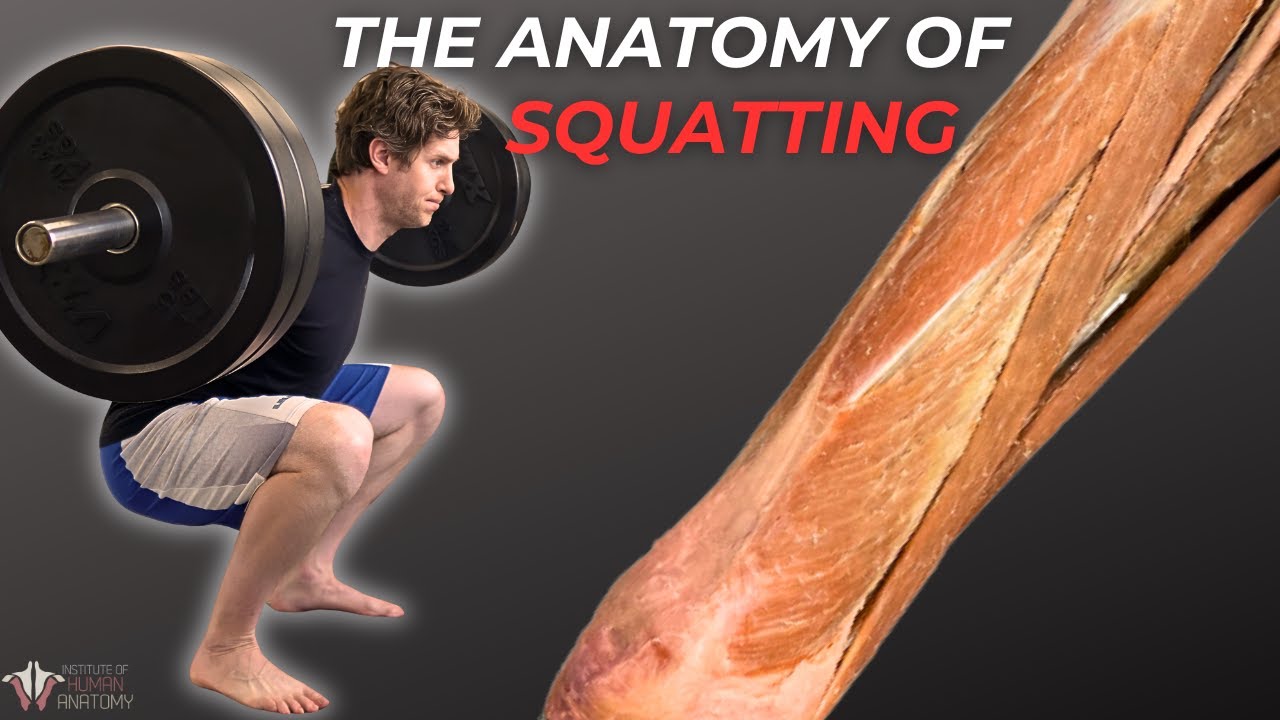
🏋️ Why You Should Squat
1. 👑 The King of All Exercises
Point: Squats engage multiple muscle groups, making them one of the most effective exercises.
Principle: The more muscles involved in an exercise, the greater the overall benefits.
Inference: Incorporating squats can improve strength, endurance, and functionality.
2. 🔄 Joint Movements in a Squat
Point: Squats involve movement at the ankle, knee, and hip.
Principle: Proper joint coordination is key for effective and safe squatting.
Inference: Understanding joint mechanics can help optimize squat form.
3. 🦵 The Role of the Calves
Point: The gastrocnemius and soleus play a role in stabilizing the squat.
Principle: Strong calves contribute to balance and control in movement.
Inference: Developing the lower leg muscles improves squat mechanics.
4. 💪 Quad Activation & Knee Stability
Point: The quadriceps control knee extension and stability in squats.
Principle: Eccentric loading enhances strength and hypertrophy.
Inference: Squats strengthen the quads and protect the knees from injury.
5. 🍑 The Power of the Hamstrings & Glutes
Point: The hamstrings and gluteus maximus work together to extend the hips.
Principle: Posterior chain activation enhances strength and mobility.
Inference: Strengthening the glutes and hamstrings improves athletic performance.
6. 🔄 The Core’s Role in Squatting
Point: Core muscles, including the obliques and transverse abdominis, stabilize the spine.
Principle: A strong core prevents excessive spinal movement during heavy lifts.
Inference: Proper bracing techniques enhance squat safety and efficiency.
7. 🏗️ Spinal Stability & The Erector Spinae
Point: The erector spinae muscles keep the spine upright during squats.
Principle: Maintaining a neutral spine protects against lower back injuries.
Inference: Developing spinal extensors enhances squat mechanics.
8. 💨 The Role of Breathing in Squats
Point: Proper breathing techniques increase intra-abdominal pressure for stability.
Principle: Bracing with deep belly breaths supports spinal alignment.
Inference: Mastering breath control improves squat performance and safety.
9. 🏋️ How to Breathe & Brace for Heavy Squats
Point: A controlled inhale and brace before descending optimizes spinal protection.
Principle: Breath retention increases core stability under heavy loads.
Inference: Proper breathing reduces the risk of spinal misalignment.
10. 🔥 The Hidden Muscle: Adductor Magnus
Point: The adductor magnus assists in hip extension and stabilization.
Principle: Engaging this muscle increases depth and power in squats.
Inference: Strengthening inner thigh muscles improves squat mechanics.
11. 📏 How Body Structure Affects Squatting Ability
Point: Individual differences in limb length and hip structure influence squat depth.
Principle: Understanding biomechanics helps tailor squat technique.
Inference: Adjusting stance and foot positioning can enhance squat effectiveness.
💡 Final Thoughts & Knowledge Gaps
- 📌 Squats engage nearly every major muscle group, making them a fundamental exercise.
- 📌 Proper form, joint mechanics, and breathing techniques optimize squat performance.
- 📌 Individual body structure influences squat depth and technique, requiring personalized adjustments.