
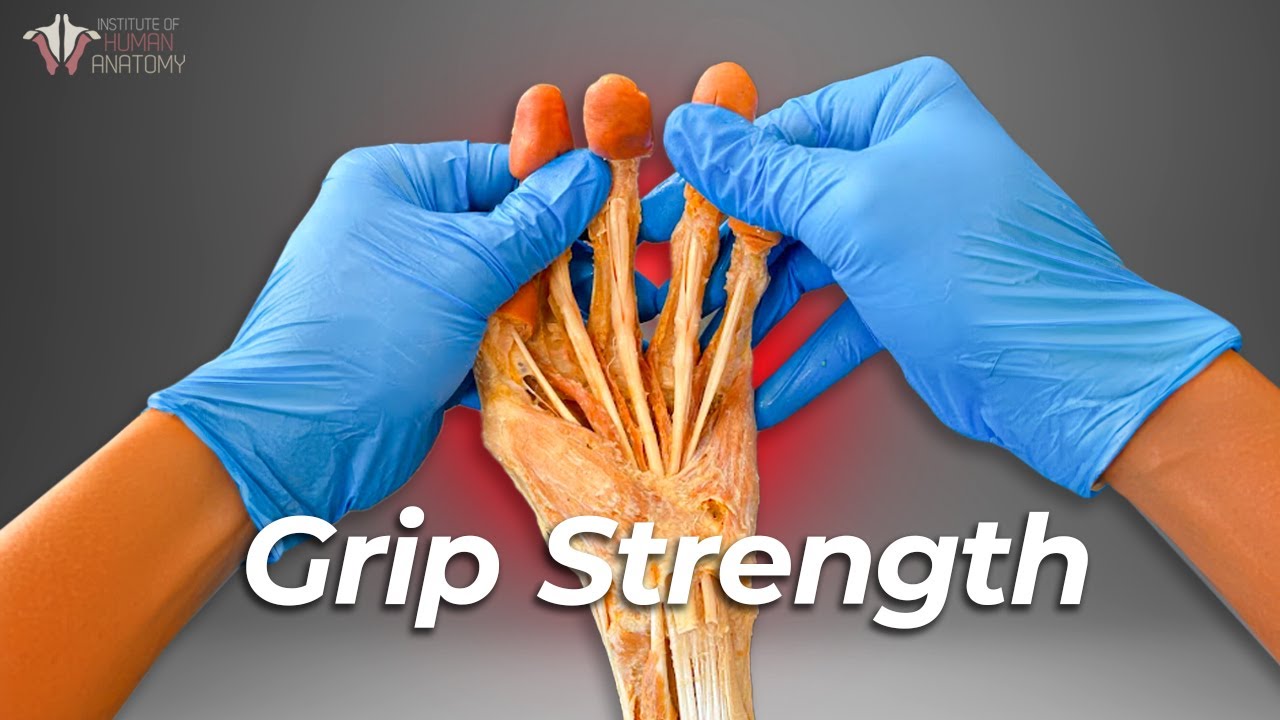
💪 Does Grip Strength Really Help You Live Longer?
1. 🏋️♂️ The Importance of Grip Strength
Point: Studies suggest that grip strength is linked to longevity and overall health.
Principle: Strong grip strength correlates with reduced frailty, better mobility, and lower risk of disease.
Inference: Improving grip strength may contribute to a longer, healthier life.
2. 🏋️♀️ Why Are There More Muscles in the Forearm?
Point: The forearm has 20 muscles compared to only four in the upper arm.
Principle: More muscles are needed to control fine movements of the wrist, fingers, and grip.
Inference: Strengthening these muscles improves dexterity and functional ability.
3. 🔬 The Science Behind Grip Strength & Longevity
Point: Grip strength is associated with reduced risk of falls, fractures, and overall frailty.
Principle: Stronger hands indicate better muscular endurance and overall fitness.
Inference: Improving grip strength could serve as an easy marker for assessing health.
4. ✊ Key Muscles That Control Grip Strength
Point: The main muscles involved in grip are the flexor digitorum superficialis and profundus.
Principle: These muscles control finger movement and grip endurance.
Inference: Strengthening these muscles improves hand function and grip force.
5. 🏗️ How Tendons & Joints Influence Grip
Point: Tendons pass through the carpal tunnel to connect muscles to fingers.
Principle: Proper tendon function is crucial for hand mobility and grip.
Inference: Strengthening grip also improves tendon resilience and joint stability.
6. 🏋️♂️ The Role of the Flexor Digitorum Profundus
Point: This deep flexor muscle is responsible for fingertip grip strength.
Principle: The ability to grip with fingertips requires strong distal joint control.
Inference: Training this muscle improves finger dexterity and strength.
7. 🖐️ The Importance of the Thumb in Grip
Point: The flexor pollicis longus controls thumb grip and overall hand function.
Principle: A strong thumb allows for better grasping and lifting.
Inference: Training thumb strength improves hand performance in daily activities.
8. 🚨 Grip Strength & Aging: What It Really Means
Point: Poor grip strength is linked to higher risks of cardiovascular disease, diabetes, and cognitive decline.
Principle: It’s an indicator of overall fitness rather than a direct cause of longevity.
Inference: Maintaining an active lifestyle is key to improving grip and overall health.
9. 💡 The Truth About Grip Strength & Longevity
Point: Grip strength is a reflection of overall activity levels, not a standalone factor.
Principle: Those with stronger grips tend to engage in physical activity regularly.
Inference: Strength training and an active lifestyle are what truly improve longevity.
10. 🏋️ How to Train Grip Strength Effectively
Point: Grip strength can be improved with dead hangs, farmer carries, and resistance training.
Principle: Functional exercises enhance grip and overall strength.
Inference: Incorporating grip training into workouts enhances hand endurance.
11. 📊 Final Verdict: Should You Focus on Grip Strength?
Point: While grip strength is important, it’s more of an indicator than a cause of longevity.
Principle: An active lifestyle improves grip naturally without excessive training.
Inference: Focus on overall strength and fitness rather than grip strength alone.
💡 Final Thoughts & Knowledge Gaps
- 📌 Grip strength is a useful indicator of overall health but not a direct cause of longevity.
- 📌 Strong grip is often a byproduct of an active, physically demanding lifestyle.
- 📌 Simple exercises like farmer carries and dead hangs can help improve grip strength.