
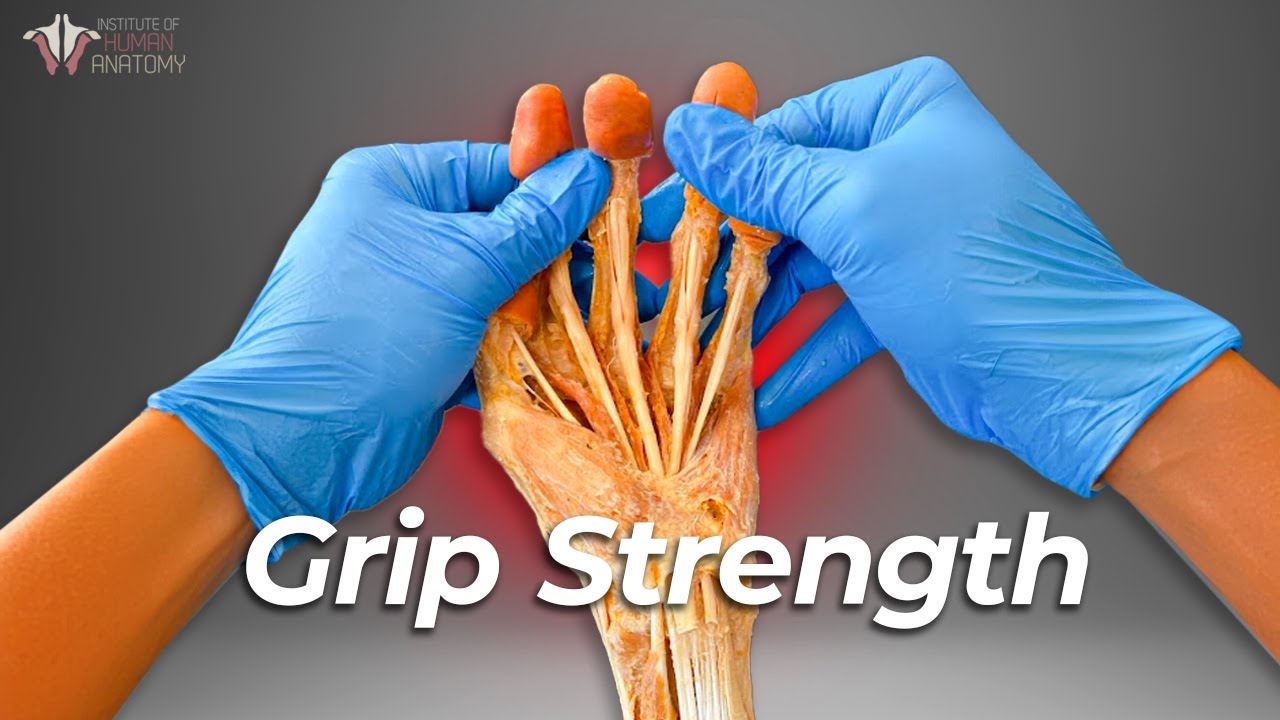
Does Grip Strength Really Help You Live Longer?
(The Science, The Myths, and The Truth About Longevity & Strength)
11 Intelligent Key Takeaways (With Logical Inferences & Knowledge Gaps Filled)
1️⃣ Grip Strength is a Strong Indicator of Overall Health
• 💡 Key Idea: Studies have shown a strong correlation between grip strength and longevity, reduced frailty, and lower risks of cardiovascular disease & diabetes. (Timestamp)
• 🔬 How We Know:
• Weak grip is linked to higher risks of heart disease, diabetes, and cognitive decline.
• Grip strength reflects total body strength, which correlates with better overall function.
• 📌 Logical Inference: Grip strength alone doesn’t make you healthier, but it signals that you engage in physically active lifestyles, which leads to longer life.
2️⃣ More Muscles = More Mobility & Strength
• 🦾 Anatomy Insight: The upper arm (brachium) has only 4 muscles, but the forearm (anti-brachium) has 20 muscles! (Timestamp)
• 📌 Why So Many?
• The upper arm mainly moves the elbow (simple movements).
• The forearm controls wrist, fingers, and fine motor skills (requiring more complex muscles).
• 🚀 Takeaway: More forearm muscles = better dexterity & grip—which affects your daily life from carrying groceries to preventing falls.
3️⃣ Grip Strength = Key to Daily Functionality & Injury Prevention
• 📌 Reality Check: As we age, maintaining grip strength helps with basic tasks like opening jars, lifting objects, and even preventing falls. (Timestamp)
• 🔬 Science Behind It:
• Stronger grip = better ability to catch yourself during a fall.
• Grip strength helps maintain independence in old age.
• 📊 Logical Inference: Loss of grip strength = higher frailty = higher risk of injury.
4️⃣ Grip Strength is a Proxy for Total Body Strength
• 📌 Why It Matters: Studies show that higher grip strength often means stronger overall muscle mass & better metabolic health. (Timestamp)
• 🔬 How It Works:
• People with high grip strength tend to engage in resistance training or physical labor.
• It’s not just about the hands—it signals a fit, active lifestyle.
• 🚀 Takeaway: Improving grip strength alongside full-body training is the real longevity hack.
5️⃣ The 3 Most Important Grip Muscles
• 🧠 Muscle Breakdown:
1. Flexor Digitorum Superficialis – Flexes middle joints of the fingers. (Timestamp)
2. Flexor Digitorum Profundus – Controls distal finger joints (critical for rock climbing & fine grip). (Timestamp)
3. Flexor Pollicis Longus – Responsible for thumb grip (key for pinching & grasping). (Timestamp)
• 📌 Logical Inference: These three muscles dictate grip strength & dexterity, making them key for aging well.
6️⃣ The Carpal Tunnel Plays a Vital Role in Grip Strength
• 📌 What is it? The Carpal Tunnel houses 9 tendons & the Median Nerve, which controls grip function. (Timestamp)
• 🚀 Why It’s Important:
• If inflamed, it compresses the median nerve, causing carpal tunnel syndrome.
• Weak grip could indicate nerve compression, not just muscle weakness.
• 🔬 Logical Takeaway: Maintaining forearm flexibility & wrist mobility prevents nerve issues that can impact grip.
7️⃣ Grip Strength is Correlated With Longevity—But Doesn’t Directly Cause It
• 📌 The Science: Stronger grip = lower mortality risk, but it’s not the cause of longevity—it’s a correlation. (Timestamp)
• 🚀 Why?
• People with strong grip usually exercise more, eat better, and have better metabolic health.
• A strong grip doesn’t magically prevent heart disease—it signals a healthier lifestyle.
• 📌 Logical Inference: Training for grip strength helps, but full-body exercise is essential for longevity.
8️⃣ The Best Exercises to Improve Grip Strength
• 🔥 Quick & Effective Movements:
1. Dead Hangs – Aim for 2 minutes bodyweight hang. (Timestamp)
2. Farmer’s Carries – Hold heavy dumbbells for 30-60 seconds.
3. Finger Flexion Drills – Focus on individual finger control for dexterity.
• 📌 Logical Inference: Simple grip exercises can be easily added into existing routines for long-term benefits.
9️⃣ Stronger Hands = Better Cognitive Function?
• 📌 What the Research Says: Some studies link higher grip strength with reduced cognitive decline. (Timestamp)
• 🔬 Possible Explanation:
• Physical activity improves blood flow to the brain.
• Resistance training releases growth factors that support brain health.
• 🚀 Takeaway: Strength training benefits both the body and the brain.
🔟 Don’t Fall for Grip Strength Gimmicks!
• 🛑 Myth: Using grip devices alone will make you live longer. (Timestamp)
• 📌 The Truth: Grip strength is just a reflection of an active lifestyle—not the secret to longevity by itself.
• 🚀 Real Solution: Total-body strength training + active lifestyle = longevity benefits.
1️⃣1️⃣ The Best Longevity Strategy = Active Lifestyle + Strength Training
• 📌 The Key Takeaway: Longevity isn’t just about grip—it’s about consistent movement & overall strength. (Timestamp)
• ✅ Best Practices for Longevity:
• Lift weights 3-4x per week
• Stay active with daily movement (walking, functional strength)
• Train grip alongside full-body strength
• 📌 Logical Inference: The healthiest people don’t just train grip—they train their entire body for resilience.
💡 Final Thoughts
✅ Grip strength matters, but it’s not a magic bullet—it’s a sign of overall physical health.
✅ Weak grip strength is linked to frailty, falls, and chronic disease, but improving it alone won’t save you.
✅ Best longevity strategy = strength training + active lifestyle—not just gripping a device!
Want to dive deeper? Rewatch key insights with these timestamps: 📌 Click Here.


