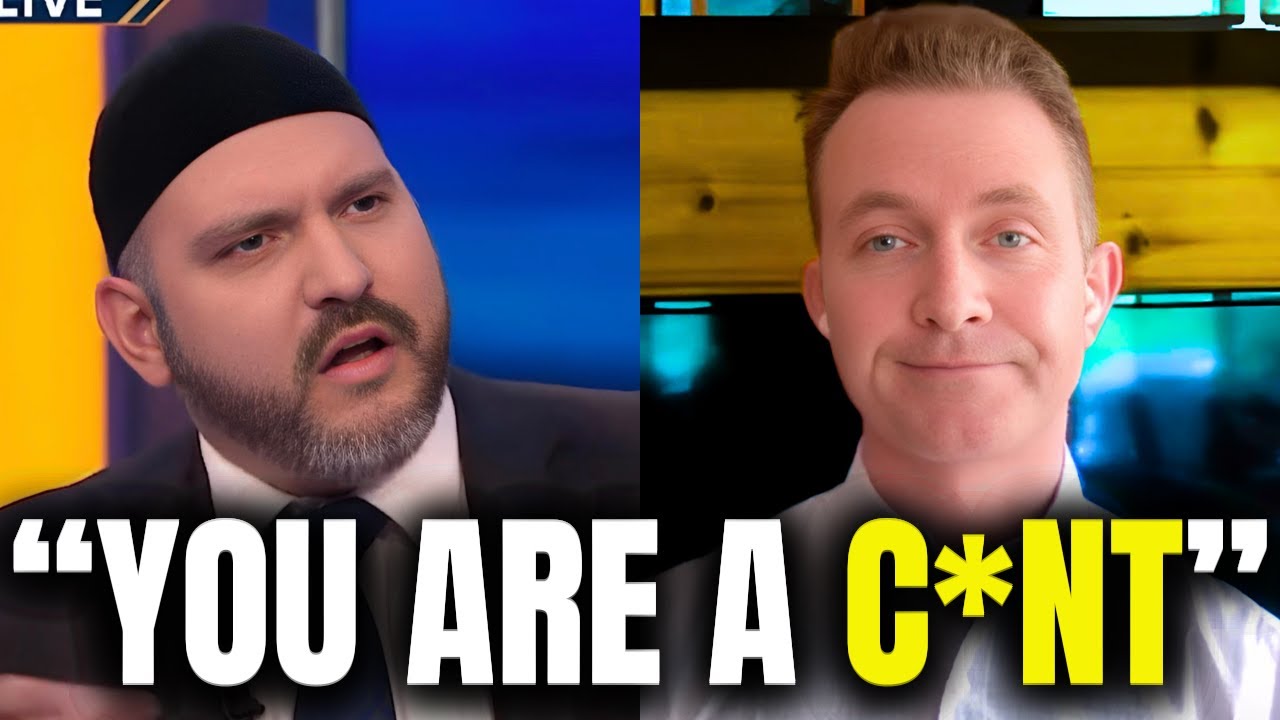
Exposing the Flaws in Douglas Murray’s Anti-Islam Rhetoric! 🚨🔥
🔗 Watch the full video here: We Don’t Need Islam, Douglas Murray Confronts Muslim on Terrorism
🔍 Breakdown of Douglas Murray’s Arguments and Thought Process
📌 Argument 1: Free Speech vs. Islam – A Contradiction?
🔹 Thought Process:
- Statement: “Islamists don’t respect free speech but demand its protection for themselves.”
- Inference: Muslim speakers want rights they deny to others.
- Statement: “Muslim leaders tried to censor The Satanic Verses.”
- Inference: Islam is fundamentally opposed to free speech.
- Statement: “Muslim protesters burned books in the UK.”
- Inference: Islam encourages book burning and suppression of ideas.
- Conclusion: Islam and free speech cannot coexist in Western societies.
- Extreme Implication: To preserve free speech, Islam must be restricted.
🔹 Prejudicial Device Used:
- Selective Framing: Ignores Western restrictions on speech (e.g., Holocaust denial laws, hate speech laws).
- Association Fallacy: Blames all Muslims for actions of a few.
- Strawman Argument: Misrepresents Islam as monolithically opposed to free speech.
✅ Rebuttal (Islamic Perspective):
- Islam values open discourse (e.g., Prophet Muhammad engaged in debate, not censorship).
- Free speech restrictions exist in all societies (e.g., laws against incitement, slander).
- The Rushdie affair was a political issue, not a theological mandate.
📍Timestamp: 02:05
📌 Argument 2: Islam Encourages Terrorism?
🔹 Thought Process:
- Statement: “Muslim extremist stabbed Salman Rushdie.”
- Inference: Islam inspires violent responses to criticism.
- Statement: “Iran’s government blamed Rushdie for his own attack.”
- Inference: Even Muslim governments endorse violence.
- Statement: “Muslim speakers refuse to condemn the attack outright.”
- Inference: Silence equals support for terrorism.
- Conclusion: Islam is inherently violent and incompatible with the West.
- Extreme Implication: Muslims should be treated as security threats.
🔹 Prejudicial Device Used:
- Guilt by Association: Links all Muslims to extremists.
- False Equivalence: Compares Islamic teachings to the actions of radicals.
- Loaded Question: Demands condemnation in a way that assumes guilt.
✅ Rebuttal (Islamic Perspective):
- Islam explicitly prohibits terrorism (Quran 5:32 – “Killing one innocent person is like killing all of humanity”).
- Extremists exist in all ideologies (e.g., far-right terrorism in the West).
- Many Muslim scholars and leaders condemn terrorism, but their voices are often ignored in Western media.
📍Timestamp: 05:10
📌 Argument 3: Muslims Cannot Integrate into Western Society
🔹 Thought Process:
- Statement: “Muslims refuse to admit the flaws in their religion.”
- Inference: Islam discourages self-criticism.
- Statement: “Western societies value open debate and reform.”
- Inference: Muslims are fundamentally incompatible with Western liberal democracy.
- Statement: “Muslims react emotionally to criticism.”
- Inference: Islam encourages dogmatism, not rational debate.
- Conclusion: Muslim presence in the West is a threat to free societies.
- Extreme Implication: Muslims should assimilate completely or be excluded.
🔹 Prejudicial Device Used:
- Generalization: Assumes all Muslims reject self-criticism.
- Framing Bias: Ignores positive contributions of Muslims to Western societies.
- Circular Reasoning: Concludes incompatibility based on selective evidence.
✅ Rebuttal (Islamic Perspective):
- Islam encourages self-reflection and accountability (Quran 13:11).
- Many Muslim-majority democracies exist (e.g., Indonesia, Malaysia).
- Muslims in the West contribute to society in fields like medicine, science, and governance.
📍Timestamp: 04:39
📌 Argument 4: The West is Right to Restrict Islamic Practices
🔹 Thought Process:
- Statement: “Muslims demand rights while opposing Western values.”
- Inference: Muslims exploit democracy without contributing to it.
- Statement: “Banning the burqa is necessary for security and social cohesion.”
- Inference: Islamic practices are inherently disruptive.
- Statement: “Making life harder for Muslims is justified.”
- Inference: Discrimination against Muslims is a rational policy.
- Conclusion: To protect Western values, Islam must be marginalized.
- Extreme Implication: Suppressing Islam is necessary for Western survival.
🔹 Prejudicial Device Used:
- Double Standard: Ignores how religious freedoms protect other groups.
- Appeal to Fear: Frames Islam as a threat without evidence.
- Slippery Slope: Assumes accommodation of Muslims will lead to societal collapse.
✅ Rebuttal (Islamic Perspective):
- Religious freedom is a core Western value – targeting Islam contradicts liberal principles.
- Islam has coexisted with democracy for centuries.
- Restricting Muslim practices fuels resentment and division, rather than fostering unity.
📍Timestamp: 03:47
🔥 Conclusion: Debunking Murray’s Anti-Islam Narrative
Douglas Murray’s rhetoric relies on misrepresentation, fearmongering, and selective framing. While challenges exist, they are not due to Islam itself, but rather historical, political, and socio-economic factors. True integration means mutual respect, not forced assimilation.
📖 Glossary
- Strawman Argument: Misrepresenting an argument to make it easier to attack.
- Guilt by Association: Blaming an entire group for the actions of a few.
- Islamophobia: Irrational fear and hostility towards Islam.
- Western Liberalism: A political ideology emphasizing individual freedoms and democracy.
- Rushdie Affair: Controversy surrounding Salman Rushdie’s novel The Satanic Verses and the fatwa issued against him.
📢 Spread the Truth – Share This Analysis! 🚀