
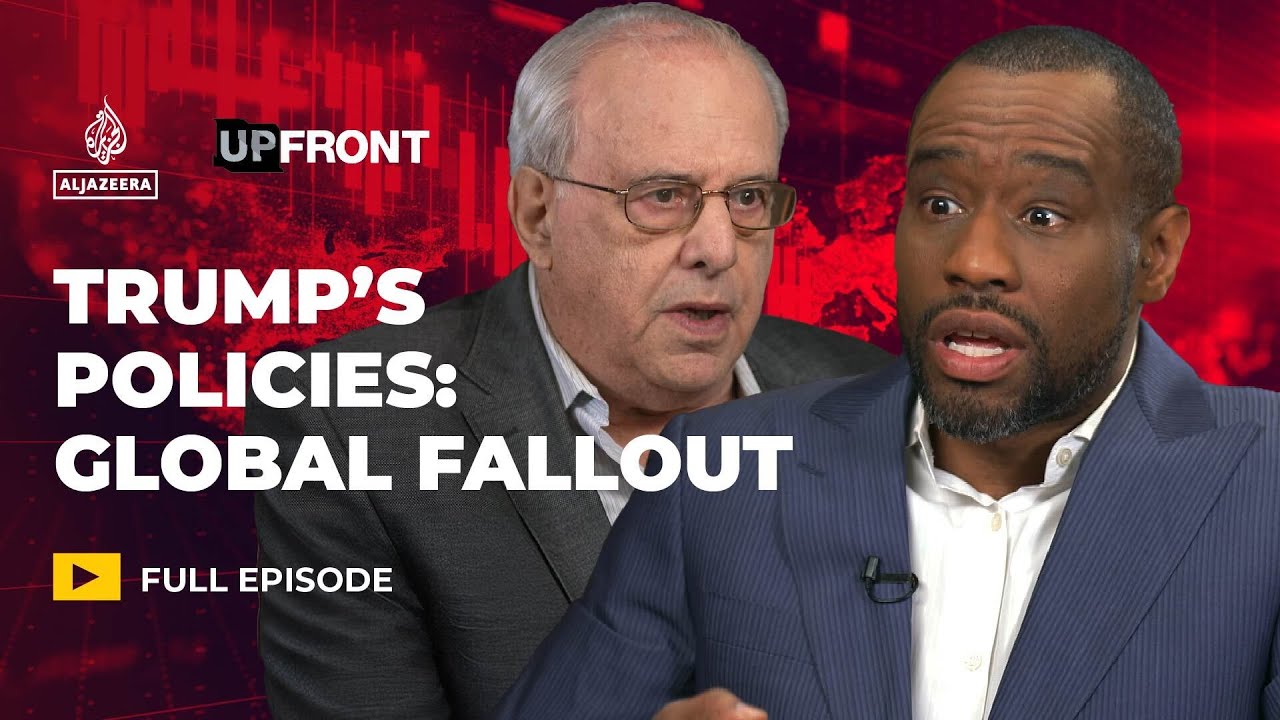
🇺🇸 The American Empire is Over: Richard Wolff on Trump, Tariffs & BRICS
1️⃣ The Reality of Trump’s Economic Policies 💰
🔹 Principle: Trump’s administration has aggressively cut federal spending, particularly in social programs, while favoring tax breaks for corporations and the wealthy.
💡 Inference: These policies deepen wealth inequality and ultimately harm the working class rather than providing the economic relief they were promised.
2️⃣ Republican vs. Democratic Economic Strategies 🏛️
🔹 Principle: Both parties support capitalism, but their economic strategies differ—Republicans emphasize tax cuts and deregulation, while Democrats appeal to diverse voter bases through different economic policies.
💡 Inference: While Republicans favor big business, the Democratic Party’s economic policies also cater to elite interests, making them structurally similar in many ways.
3️⃣ The True Cost of Trickle-Down Economics 📉
🔹 Principle: The idea that tax cuts for corporations lead to economic growth and job creation has been debunked.
💡 Inference: Instead of benefiting the masses, these policies have enriched the elite while government services deteriorate, leaving the working class struggling.
4️⃣ The Reality of U.S. Debt & Economic Decline 📊
🔹 Principle: The U.S. faces an unprecedented level of national, corporate, and personal debt, making traditional economic strategies unsustainable.
💡 Inference: As global lenders lose confidence in the U.S., economic instability and austerity measures will become more severe.
5️⃣ The Shift to Privatization & Its Consequences ⚠️
🔹 Principle: Mass layoffs in the public sector, driven by privatization and deregulation, will force workers into low-wage private sector jobs.
💡 Inference: The elimination of government job security will drive down wages and working conditions in the private sector.
6️⃣ The U.S. Economy vs. The Rise of BRICS 🌍
🔹 Principle: The global economy is shifting, with the BRICS nations (Brazil, Russia, India, China, South Africa) overtaking the G7 in economic output.
💡 Inference: The U.S. is no longer the dominant economic power, forcing developing nations to seek economic alliances elsewhere.
7️⃣ How U.S. Tariffs Hurt America More Than China 🇨🇳
🔹 Principle: Tariffs on Chinese goods don’t hurt China—they increase costs for American consumers.
💡 Inference: Protectionist policies may help U.S. companies temporarily, but they weaken America’s global competitiveness in the long run.
8️⃣ The Global Military Disparity ⚔️
🔹 Principle: The U.S. maintains 750 military bases worldwide, while China has almost none.
💡 Inference: America’s military overextension is unsustainable, especially as its economic power declines.
9️⃣ The Decline of U.S. Global Influence 🇺🇸⬇️
🔹 Principle: The shift of power toward China and BRICS nations is irreversible, with developing countries now favoring economic deals with Beijing over Washington.
💡 Inference: The U.S. must accept its declining influence and adapt to a multipolar world rather than resisting it with outdated imperial tactics.
🔟 The Ukraine War & America’s Strategic Retreat 🇺🇦
🔹 Principle: U.S. involvement in Ukraine is failing, and Trump’s strategy is to quietly withdraw rather than prolong a losing battle.
💡 Inference: America’s diminishing global dominance is evident as it begins to scale back foreign interventions due to economic and political constraints.
1️⃣1️⃣ The Future of U.S. Leadership: Adapt or Collapse? 🔄
🔹 Principle: The American Empire is following the same trajectory as past empires—decline is inevitable, but adaptation is possible.
💡 Inference: If the U.S. fails to adjust its policies and accept its new global role, it risks further economic and political instability.
🛠️ Commands
• 🔍 [L] Expand summary
• 📖 [A] Write an educational article
• 📊 [D] Create conclusion diagram
• 🎯 [T] Assess my knowledge of the video through a multiple-choice quiz
• ⏳ [I] Indicate timestamps