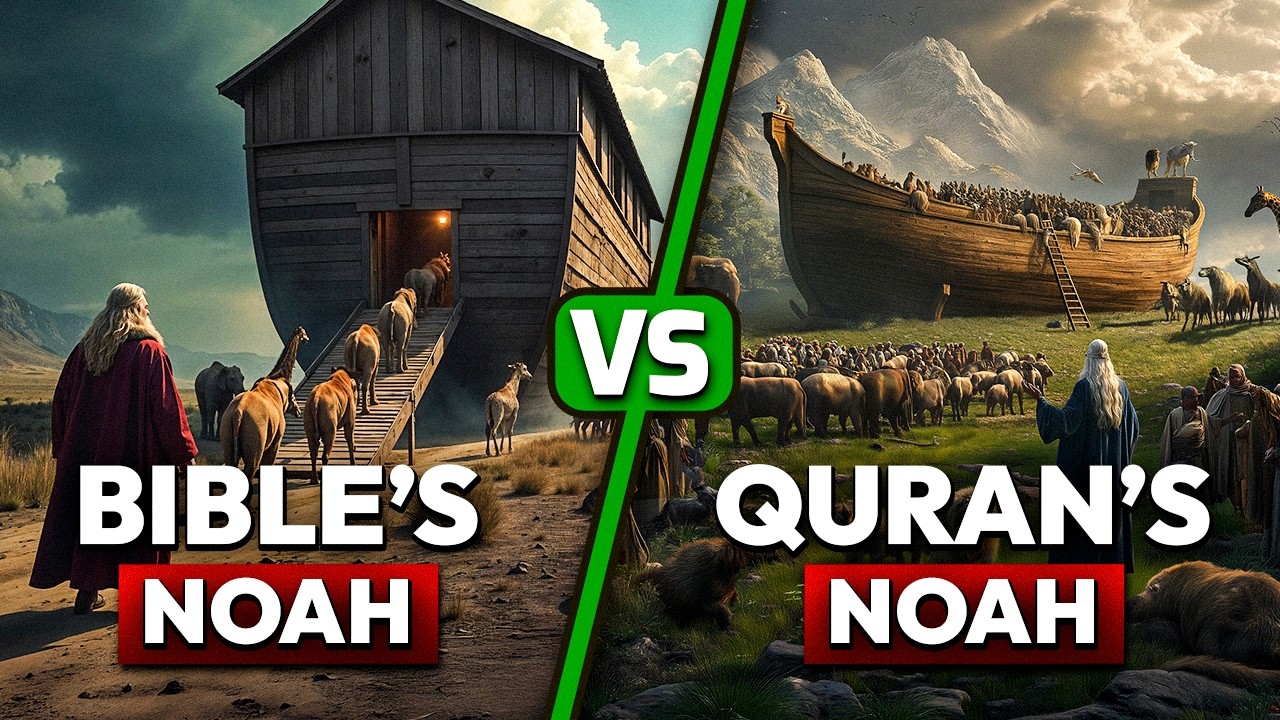
Noah’s Ark: Key Differences Between Quranic and Biblical Narratives Explained
Understanding Prophet Noah’s Mission and Challenges
- Prophet Noah (pbuh) was a morally upright man sent to a corrupt, idolatrous society dominated by immorality and arrogance (00:02:00)
- He tirelessly warned his people to abandon false gods and immoral practices but faced rejection, insults, and mockery (00:02:30)
- Despite opposition, Noah remained compassionate and persistent, praying to God for judgment and salvation for the believers (00:03:00)
Construction of the Ark: Divine Command and Public Reaction
- God commanded Noah to build an ark as a vessel of salvation, a command detailed with measurements and materials in the Bible but less so in the Quran (00:04:00)
- People mocked Noah for building a ship on dry land, doubting its purpose and feasibility (00:04:30)
- Noah obeyed God’s command without hesitation, trusting in divine power to bring the flood and protect the ark (00:05:00)
Boarding the Ark: Differences in Passengers and Animal Pairs
- The Quran states Noah took pairs of each living creature and all believers on board, excluding disbelievers, including one of his sons who refused to join (00:06:00)
- The Bible mentions Noah’s family and animals but contains contradictory passages about the number of animal pairs: one pair in one passage, seven pairs of clean animals in another (00:06:30)
- Noah’s son’s refusal and drowning is a unique Quranic detail absent in the Bible (00:07:00)
The Flood: Scope, Duration, and Divine Purpose
- The Bible describes the flood as covering the entire earth, wiping out all life except those on the ark (00:08:00)
- The Quran leaves the flood’s extent ambiguous; scholars debate whether it was global or regional, emphasizing the moral lessons over geography (00:08:30)
- The flood was a divine punishment for persistent corruption and rejection of Noah’s message (00:09:00)
Aftermath of the Flood: Worship, Covenant, and Controversies
- The Bible narrates Noah building an altar and offering sacrifices, after which God promises never to curse the earth again (00:10:00)
- Biblical accounts include problematic stories such as Noah’s drunkenness and the curse on Canaan, which have been historically misused to justify racial discrimination (00:10:30)
- The Quranic narrative avoids such contradictions and inappropriate attributions, portraying God as perfect and free from regret or error (00:11:00)
Contradictions and Theological Implications in Biblical Narratives
- The Bible contains inconsistencies, such as differing numbers of animal pairs and descriptions of God’s emotions like regret and anger (00:11:30)
- These portrayals conflict with the Islamic concept of God’s perfection and infallibility (00:12:00)
- The Quran is presented as a corrective revelation, clarifying and refining earlier scriptures (00:12:30)
Final Reflections: Prophetic Guidance and the Role of the Quran
- Prophets like Noah and Jesus served as guides on humanity’s journey, with the Quran and Prophet Muhammad (pbuh) as the final guidance and compass (00:13:00)
- The Quran corrects false beliefs introduced over time, including misconceptions about Jesus and earlier prophets (00:13:30)
- The story of Noah’s ark serves as a timeless lesson on faith, obedience, divine justice, and mercy (00:14:00)
Detailed Conclusions and Inferences for Quick Learning
- Prophet Noah’s Character and Mission
- Noah was a patient, compassionate prophet sent to a deeply corrupt society.
- His mission was to guide people back to monotheism and moral integrity.
- Divine Command and Ark Construction
- The ark was divinely commanded as a means of salvation.
- Public mockery highlights human skepticism toward divine plans.
- Differences in Animal Boarding Instructions
- Quran: Two of each species, all believers on board; one son refused.
- Bible: Contradictory instructions on animal pairs; all sons on board.
- Flood’s Extent and Purpose
- Bible: Global flood wiping out all life except ark occupants.
- Quran: Ambiguous flood extent; focus on moral and spiritual lessons.
- Post-Flood Events and Controversies
- Bible includes problematic narratives (Noah’s drunkenness, curse on Canaan).
- Quranic narrative is free from contradictions and inappropriate depictions.
- Theological Consistency
- Biblical portrayal of God includes human-like emotions (regret, anger).
- Quran emphasizes God’s perfection, infallibility, and justice.
- Role of the Quran as Corrective Scripture
- Quran clarifies and corrects earlier scriptures’ inaccuracies.
- It restores the true message of prophets, including Noah and Jesus.
- Historical Misuse of Biblical Narratives
- The curse on Canaan was historically misused to justify racial discrimination.
- Modern scholarship rejects these interpretations as unfounded.
- Prophetic Legacy and Final Guidance
- Prophets are guides on humanity’s journey toward truth.
- Prophet Muhammad (pbuh) and the Quran represent the final, complete guidance.
- Moral and Spiritual Lessons
- Faith and obedience to God are paramount.
- Divine justice is inevitable for persistent wrongdoing.
- Mercy and hope remain for believers despite adversity.
This structured, SEO-friendly content with embedded timestamps allows readers to navigate the detailed comparison of Noah’s Ark narratives efficiently, enhancing engagement and monetization potential.